News
How Cognitive Behavioral Therapy Can Help Manage Everyday Stress

Key Takeaways
- Cognitive Behavioral Therapy (CBT) empowers individuals to manage daily stress by changing negative thought patterns.
- Simple CBT strategies, such as thought stopping and concreteness training, can reduce anxiety and promote resilience.
- Making CBT a regular part of your everyday life can help foster sustainable mental well-being and healthier brain function.
Understanding Cognitive Behavioral Therapy
Cognitive Behavioral Therapy (CBT) is a practical, evidence-based form of psychotherapy that encourages people to examine the connections between their thoughts, feelings, and behaviors. Developed to treat a wide range of mental health conditions, its structured approach is highly effective for everyday stress management. By focusing on identifying and replacing unhelpful thinking, individuals build more adaptive coping strategies. Learn more about tailored professional support at AMK Counseling for additional guidance with CBT.
CBT’s approachable methods have made it one of the most widely practiced therapies, recommended by organizations such as the American Psychological Association for issues ranging from general stress to depression and anxiety. By breaking overwhelming problems into smaller, manageable parts, CBT allows people to focus on what they can control in their daily lives.
Instead of letting worries spin out of control, CBT equips individuals with science-backed techniques to challenge harmful thinking. The therapy’s focus on short-term, achievable goals can make a noticeable difference even after a few weeks of consistent practice. As a result, people often report feeling more in control and resilient in the face of daily stressors.
One of CBT’s core strengths is its practical application. The skills learned in therapy can be immediately incorporated into personal and professional routines, making daily stress more straightforward to manage. Resources like the Mayo Clinic highlight how accessible and effective CBT techniques can be for self-care.

Identifying Negative Thought Patterns
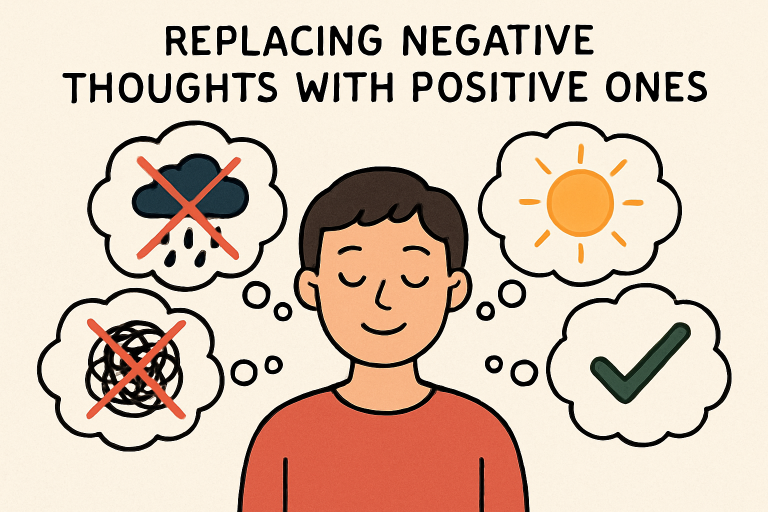
The foundation of CBT lies in learning how to recognize negative thought patterns that trigger stress. These include common distortions such as catastrophizing (imagining the worst-case scenario), all-or-nothing thinking (viewing situations in black-and-white), and overgeneralization (assuming a single adverse event will recur). Identifying these patterns is the first step in regaining control over your emotional responses and breaking the cycle of stress.
Awareness is key. Once you recognize these thought traps, you can start to evaluate their accuracy and work toward a more balanced perspective. Every time an unhelpful thought arises, ask yourself whether the evidence truly supports that belief or if you are following an ingrained mental habit.
Techniques for Managing Stress
CBT offers a toolkit of practical strategies to combat everyday stress. Two widely used techniques include:
- Thought Stopping: This method involves recognizing when a negative thought enters your mind and firmly telling yourself to “stop.” Many people visualize a stop sign or say the word “stop” aloud or silently, then consciously shift attention to a neutral or positive thought. This simple act can disrupt spirals of worry or rumination, reducing their impact.
- Concreteness Training: This technique teaches individuals to swap vague, distressing worries for specific, actionable thoughts. For example, instead of “I’ll never get everything done,” narrow the statement to “I need to complete three priority tasks today.” This shift not only reduces anxiety but also boosts problem-solving and motivation.
Practicing these strategies can retrain your brain to respond to stress with greater calm and clarity. Repeated use of CBT techniques has also been shown to help break patterns of chronic stress and anxiety, according to research from the National Institute of Mental Health.
Incorporating CBT into Daily Life
Making CBT a daily habit does not require significant life changes. Instead, small, consistent steps are most effective. Set attainable goals, like writing down a negative thought each day and practicing one reframing technique. Incorporate relaxation methods, such as deep breathing or mindfulness exercises, to boost the effect of CBT.
Building CBT strategies into routines, whether at work, home, or school, can help you maintain a balanced perspective, especially during moments of high pressure. As you make these practices second nature, you may notice an overall improvement in your mood, relationships, and problem-solving abilities.
Benefits of CBT for Stress Management
Numerous studies have demonstrated the long-term benefits of CBT. Not only does it lead to measurable reductions in stress and anxiety, but it also supports lasting changes in the brain’s emotional regulation circuits. For example, researchers at Stanford Medicine have linked CBT to tangible improvements in brain regions that support emotional control, self-reflection, and resilience. A study published by the National Institute of Mental Health found that children with anxiety showed significant decreases in anxiety symptoms and improved brain function following CBT treatment.
By retraining the mind to approach challenges rationally, CBT provides lifelong tools for handling setbacks and uncertainty. The consistency of its positive outcomes has led major healthcare organizations and leading publications, like The New York Times, to recognize CBT as a first-line approach for managing mood disorders and everyday stress.
Seeking Professional Guidance
While self-help resources are valuable, working with a licensed CBT practitioner can provide personalized strategies and support. Professionals are trained to help you tailor techniques to your unique needs, maximize progress, and address obstacles that may arise in your stress management journey. Therapy sessions offer a safe space for reflection, skill-building, and ongoing accountability.
Conclusion
Managing everyday stress is vital for both mental and physical health. Cognitive Behavioral Therapy enables people to identify and interrupt negative thought patterns, adopt proactive coping skills, and foster lasting resilience. Integrating CBT practices into your daily routine can transform the way you approach stress, leading to better overall well-being and a more positive outlook on life.