Lifestyle
How Asking the Right Interview Questions Can Predict Job Success

Key Takeaways
- Structured interviews with consistent questions enhance fairness and reduce bias.
- Behavioral questions reveal past performance and problem-solving abilities.
- Inquiring about team dynamics and company culture ensures alignment with organizational values.
- Assessing adaptability and learning capacity is vital in today’s evolving work environment.
Conducting effective interviews is essential for organizations seeking to identify candidates who are not only qualified but also poised to thrive in the role and the company culture. When employers and recruiters focus on meaningful questions, they can gauge a candidate’s abilities, values, and growth potential with much greater accuracy. Learning why are you interested in this position is a key example of how specificity in questioning can unlock deeper candidate motivations and help forecast workplace success.
The right interview approach provides clarity for both the interviewer and the candidate, eliminating guesswork and fostering bias-free decisions. A structured set of questions levels the playing field, ensuring that all candidates are evaluated consistently, while customized follow-ups delve into unique strengths and experiences. As organizations adapt to new hiring challenges and more dynamic roles, the interview process has become a crucial predictor of future employee performance and satisfaction.
The Importance of Structured Interviews
Implementing a structured interview process where each candidate answers the same foundational questions helps standardize evaluations and minimize bias. Research shows that structured interviews are significantly more effective at predicting job performance compared to unstructured ones. Organizations that update their interview strategies to maintain consistency empower hiring managers to make objective judgments, relying less on gut feelings and more on candidate merits. Structured questioning “ensures a consistent evaluation process,” thereby yielding more reliable hiring decisions.
Behavioral Questions: A Window into Past Performance
One of the most powerful interview techniques is the behavioral question. These queries ask candidates to describe previous real-world situations that demonstrate their skills and judgment. For instance, questions like “Tell me about a time when you faced a significant challenge at work and how you handled it” go beyond hypothetical responses. The interviewer learns about the candidate’s critical thinking, determination, and approach to adversity.
Behavioral interviewing is rooted in the belief that past behavior is the best indicator of future performance. According to The Balance Careers, detailed scenario-based questions enable companies to gauge both technical expertise and the thought process behind a candidate’s solutions. This helps employers predict how effectively the individual will operate in high-pressure or unpredictable circumstances.
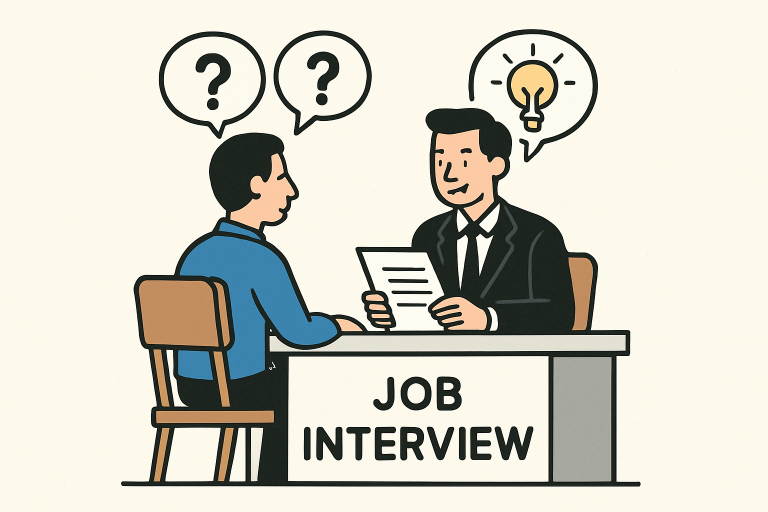

Understanding Team Dynamics and Cultural Fit
Every organization has its own culture, values, and expectations for teamwork. When interviewers ask about a candidate’s preferred work style or experiences collaborating within teams, they learn whether the individual is likely to align with existing team members and succeed in the company’s environment. Asking “Can you describe the type of team environment in which you thrive?” can reveal subtle interpersonal preferences and highlight whether the candidate is suited for the company’s way of working.
Ensuring cultural fit is not simply about comfort; it influences motivation, retention, and employee satisfaction. Hiring managers who prioritize cultural alignment can help foster a more cohesive and engaged workforce, leading to long-term organizational success. According to Harvard Business Review, assessing for culture fit can sometimes matter as much as technical ability when predicting employee performance and longevity.
Assessing Adaptability and Learning Agility
In a rapidly changing workplace, especially with the rise of technology and shifting organizational priorities, adaptability stands out as a decisive quality. Interviewers should look for evidence of learning agility in candidates who can quickly pick up new skills, adapt to evolving processes, and respond to unforeseen challenges with poise.
Useful questions include: “Describe a time you had to learn a new skill quickly,” or “How did you handle a major change at work?” Responses to these questions highlight flexibility, hunger to grow, and a proactive attitude toward self-development. Adaptable employees are more likely to overcome obstacles and contribute to a positive work culture.
Evaluating Problem-Solving and Critical Thinking
Successful employees are not only doers; they are thinkers who approach problems analytically and creatively. Presenting hypothetical scenarios or role-specific case studies within the interview enables employers to observe how candidates reason through tough situations and make decisions. For example, asking “What would you do if you discovered a significant error in a project close to deadline?” challenges the candidate’s practical judgment.
According to The Balance Careers, detailed scenario-based questions enable companies to gauge both technical expertise and the thought process behind a candidate’s solutions. This helps employers predict how effectively the individual will operate in high-pressure or unpredictable circumstances.
Inquiring About Long-Term Goals and Motivation
Interviews are also an opportunity to understand what drives each candidate and where they see their careers headed. Motivation and vision affect engagement, productivity, and retention. Asking about aspirations such as “Where do you see yourself in five years?” gauges alignment with the company’s goals and the likelihood of long-term commitment.
Employees whose personal ambitions overlap with organizational goals are more likely to invest themselves in their work and deliver sustained value, while interviewers who probe for motivations foster deeper connections and stronger hiring outcomes.
Conclusion
Crafting thoughtful interview questions yields powerful insights into candidates’ experiences, adaptability, teamwork preferences, and ambitions. This approach not only predicts potential for success but also ensures a fair, inclusive, and effective hiring process. In a competitive talent landscape, mastering interview strategy can be the determining factor in building high-performing, cohesive teams that drive an organization forward.