
News
What Structural Differences Does Nav Int Consider Between Vertical and Horizontal Infrastructure?

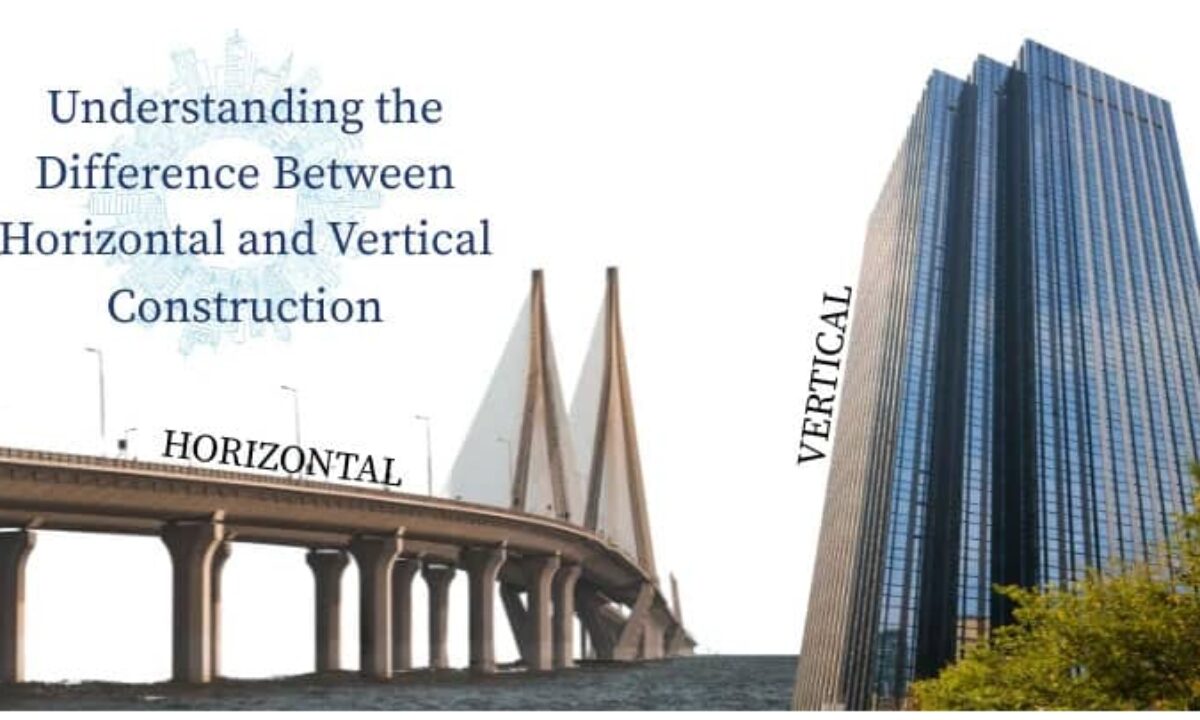
Early structural decisions often shape how infrastructure performs for decades. Orientation alone changes how forces move, how materials behave, and how teams coordinate work on site. For complex developments, understanding these contrasts early helps projects stay controlled, efficient, and buildable across varied environments.
Spatial Orientation Differences Between Lateral Infrastructure and Vertical Building Expansions
Vertical construction concentrates activity within a compact footprint. Towers and multi-story facilities stack functions upward, requiring precise spatial coordination between floors, systems, and structural frames. Small alignment errors can multiply as height increases, making early dimensional planning a core concern for teams involved in Navigator International Global Construction work.
Horizontal infrastructure spreads across distance instead of height. Roads, pipelines, and utility corridors must adapt to changing terrain, land ownership boundaries, and environmental conditions. Rather than stacking systems, horizontal layouts prioritize continuity, flexibility, and long-range alignment across many physical zones.
Varying Structural Load Paths Required for Tall Structures Versus Extended Horizontal Spans
Tall structures depend on vertical load paths that transfer weight directly downward through columns, cores, and foundations. Wind, seismic forces, and gravity loads must be managed simultaneously, often requiring redundant systems to maintain stability as height increases. Extended horizontal spans distribute loads differently. Bridges, elevated roadways, and pipelines rely on continuous supports and expansion joints to manage stress across long distances. Navigator International Construction Company teams account for thermal movement, soil shifts, and traffic loads that accumulate gradually rather than vertically.
Divergent Foundational Design Needs for Buildings Compared to Road or Pipeline Networks
Building foundations concentrate strength at specific points. Deep piles, mats, or caissons are designed to support concentrated loads under columns and cores. Subsurface conditions directly influence foundation depth and configuration for vertical projects.
Linear infrastructure requires foundations that adapt to changing soil profiles. Roadbeds, trench systems, and pipeline supports must remain stable across varied ground conditions. Navigator International Government construction projects often require extensive geotechnical coordination to ensure consistent performance over long distances.
Distinct Material Handling and Logistics Demands for Long Linear Infrastructure
Vertical construction emphasizes vertical material movement. Cranes, hoists, and lifts must deliver materials efficiently upward while maintaining safety and sequencing accuracy. Storage space is limited, making just-in-time delivery a frequent requirement.
Horizontal projects face different challenges. Materials must be transported over distance, staged along corridors, and protected from environmental exposure. Nav Int teams consider access roads, staging zones, and transportation limits early to avoid delays tied to material flow.
Height-dependent Safety and Access Systems in Vertical Construction
Safety systems in tall structures must account for elevation risks. Fall protection, controlled access zones, and vertical evacuation planning are integrated into construction methods from the outset. Equipment selection also reflects height-related constraints.
Horizontal projects emphasize site-wide safety controls. Traffic management, trench safety, and equipment movement across active corridors require constant oversight. While elevation risks are lower, the scale of movement introduces its own operational challenges that differ from vertical builds.
Horizontal Projects Requiring Broader Earthworks and Grading Strategies
Earthworks for buildings focus on preparing a defined footprint. Excavation depth, soil stabilization, and drainage planning are tightly controlled within a limited area. Precision is prioritized over volume.
Linear infrastructure often involves extensive grading across wide areas. Cut-and-fill balancing, erosion control, and surface restoration become major planning elements. Navigator International Global Construction teams evaluate terrain variation early to align grading strategies with environmental and regulatory expectations.
Differing Regulatory and Permitting Processes Tied to Project Orientation
Vertical developments typically face building-focused regulations. Zoning limits, height restrictions, fire codes, and occupancy standards shape design and approval processes. Coordination with municipal authorities plays a central role.
Horizontal infrastructure encounters broader oversight. Environmental agencies, transportation authorities, and utility regulators often review different segments of the same project. Navigator International Construction Company experience helps manage these layered approvals without slowing progress.
Expertise Balance Between Architectural Coordination and Civil Engineering Oversight
Vertical projects rely heavily on architectural coordination. Structural systems must integrate seamlessly with mechanical, electrical, and interior layouts. Collaboration between disciplines ensures that form and function remain aligned. Horizontal projects shift emphasis toward civil engineering oversight. Drainage, alignment, and long-term durability take priority over architectural detailing. Navigator International brings together a team of highly skilled professionals capable of delivering technical turn-key solutions tailored to each client’s specific requirements, encompassing both vertical and horizontal construction.