
Health
Innovative Approaches to Chronic Pain Management


Key Takeaways
- Innovative non-opioid medications are breaking barriers in effective pain relief without addiction risk.
- Immersive technologies like virtual reality are revolutionizing non-drug options for pain reduction.
- Holistic and remote care models are making pain management more accessible and comprehensive.
- Personalized, preventative strategies and regenerative treatments are improving long-term outcomes.
Chronic pain is a pervasive health issue, affecting an estimated 50 million adults in the United States alone. Traditional therapies, including opioids and basic physical therapy, frequently fail to deliver consistent relief or come with unacceptable side effects and risks. As research advances, new solutions are emerging to address limitations and improve outcomes for those who suffer. In this article, we delve into the latest innovative approaches to chronic pain management, providing hope for a better quality of life and improved daily function. For specialized pain care options, Midwest Vascular and Pain Specialists offers comprehensive resources and guidance.
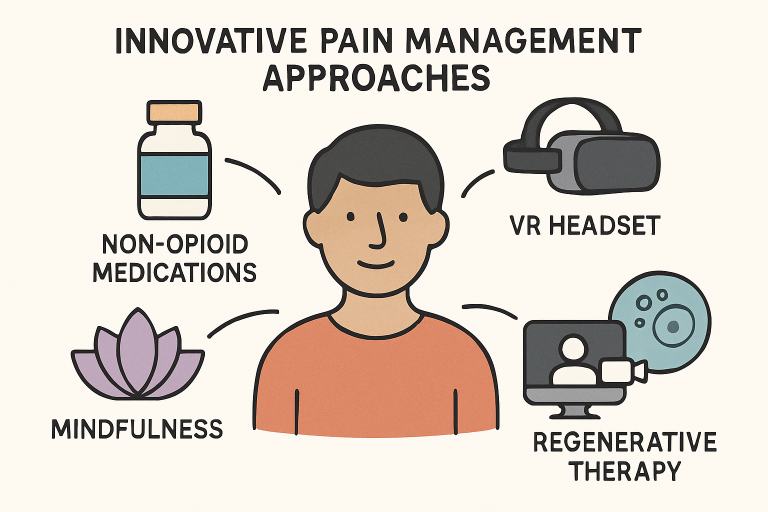
The future of chronic pain care focuses on integrating non-opioid medications, virtual reality therapies, mindfulness, regenerative medicine, and early intervention strategies to develop a multifaceted and sustainable approach. These innovations are reshaping pain care and offering new ways to alleviate suffering for millions worldwide. By embracing a wider range of therapies, chronic pain patients have a better chance of regaining control of their lives and participating more fully in daily activities.
Non-Opioid Medications: A New Frontier
The opioid crisis in the United States has intensified the search for safer pain medicines. A significant breakthrough has recently come in the form of Journavex, a non-opioid painkiller developed by Vertex Pharmaceuticals and approved by the FDA. Unlike opioids, Journavx works by targeting sodium channels involved in the transmission of pain signals, providing effective relief for moderate to severe pain without the risk of dependency or abuse. This innovation addresses major gaps in pain care and signals a shift toward safer pharmaceutical solutions.
Virtual Reality: Immersive Pain Relief
Emerging digital therapeutics, such as virtual reality (VR), are gaining ground as powerful, non-pharmacological pain management tools. In controlled studies, immersive VR environments have been shown to reduce pain intensity by altering the brain’s perception of pain. A recent study by the University of Exeter found that participants who used calming, interactive VR experiences reported significantly greater pain reduction than those exposed to standard 2D screens. VR applications are already being piloted in clinical healthcare settings to treat chronic pain conditions and even acute procedural pain, pointing to a promising future for digital interventions.
Mindfulness-Based Interventions: Cultivating Awareness
Mindfulness-Based Pain Management (MBPM) programs have gained popularity for their holistic impact on pain perception and emotional well-being. Organizations such as Breathworks have pioneered MBPM programs that focus on techniques such as meditation, breath regulation, and “loving-kindness” meditation. These interventions help individuals cultivate greater body awareness, manage flare-ups, and reduce their reliance on medication. Patients participating in mindfulness-based courses often report improved function and greater resilience, underscoring the value of psychological tools in managing pain.
Remote Interventions: Accessible Care
Telehealth and digital coaching are bridging major gaps in chronic pain care, increasing access and convenience for patients. According to a 2025 study published in JAMA, remote interventions such as online pain coping skills training and telehealth coaching have demonstrated efficacy in reducing the severity of chronic pain and improving quality of life compared to standard, in-person approaches. The new digital solutions enable ongoing support and adaptation to evolving patient needs, making expert advice and pain management tools more widely available and flexible than ever before. Remote access can be especially beneficial for individuals living in rural or underserved areas.
Regenerative Medicine: Healing from Within
Regenerative therapies, such as cell-based treatments, are offering novel solutions for those seeking long-term relief and tissue healing. Innovations like Rexlemestrocel-L, an allogeneic mesenchymal precursor cell, have demonstrated sustained pain reduction and improved function in patients with degenerative disc disease, a common cause of chronic back pain. These approaches focus on repairing underlying tissue damage, targeting the source of pain rather than masking symptoms, and providing new hope for those with limited conventional treatment options.
Holistic Approaches: Comprehensive Care
Modern pain management increasingly recognizes the role of lifestyle, nutrition, movement, and mental health in delivering sustained outcomes. Comprehensive, personalized programs integrate elements such as anti-inflammatory diets, sleep optimization, targeted exercise, and stress reduction strategies. Research shows that combining these factors—rather than relying solely on medication—leads to better long-term pain reduction and overall health. A truly multidisciplinary model allows providers and patients to tackle the complex, interconnected contributors to chronic pain, establishing a foundation for contributing resilience and recovery. Identification.
Preventing Chronicity
Effective prevention and early intervention are crucial in stopping acute pain from developing into chronic pain syndromes. Simple screening tools, such as a two-question survey that identifies patients at risk, empower providers to recognize early signs and implement personalized, holistic strategies. These approaches have been linked to reduced opioid rates, lower healthcare costs, and better overall outcomes. By focusing on proactive risk identification, clinicians and patients can work together to prevent pain from becoming a persistent and debilitating problem. More on proactive pain care is discussed in resources from NIH Research Matters.
Conclusion
Pain management resources are undergoing a transformation, driven by innovation, transforming accessibility, and holistic well-being. By combining non-opioid medications, immersive technologies, mindfulness practices, regenerative therapies, and early preventative strategies, today’s care teams can offer more personalized and effective solutions to chronic pain sufferers. Embracing these advancements is crucial to improving patient outcomes and ensuring a future in which chronic pain no longer controls lives.