
News
Smart Solutions for Modern Community Living

Key Takeaways
- Innovative technologies are revolutionizing community living by enhancing convenience, security, and sustainability.
- Implementing innovative solutions can lead to significant cost savings and improved quality of life for residents.
- Successful examples of smart communities demonstrate the scalability and effectiveness of these technologies.
In today’s fast-paced world, integrating innovative and smart technology has become a cornerstone of successful community development. By embracing innovative solutions, neighborhoods can boost convenience, improve security, and encourage sustainable practices for all residents. This transformation has made the concept of modern community living far more efficient and attractive for individuals and families alike. Homeowners’ associations and property managers, such as Southern States Management Group, are increasingly relying on innovative solutions to create connected, comfortable environments that meet residents’ evolving expectations. These advancements streamline everything from energy use to daily communication, making each community safer, greener, and more enjoyable for everyone. This transition isn’t just about flashy technology. It’s about addressing real-world challenges—ensuring residents are secure, services are accessible, and energy use is responsible. Modern community living is being reshaped by practical and scalable innovations that integrate seamlessly into everyday life. As innovative technology becomes more accessible, communities of all types, including multifamily complexes, retirement villages, and single-family home neighborhoods, are finding it easier to adopt these systems. This widespread evolution paves the way for a higher standard of living, with potential cost savings and quality-of-life improvements for all.
Smart Home Technologies
Smart home technology enables residents to manage their living spaces with unprecedented ease and convenience. Devices such as programmable thermostats, automated lighting, and smart appliances can be controlled using smartphones or voice commands, improving both comfort and energy efficiency. For example, smart thermostats learn usage patterns and automatically adjust heating and cooling to optimize energy use—saving residents money while supporting environmental efforts.
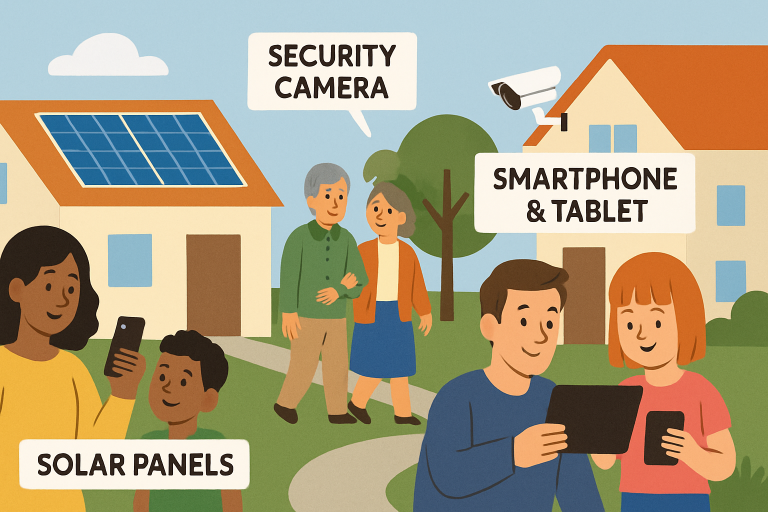
Innovations like these are transforming the average home into a hub of convenience. Connected appliances can even communicate potential maintenance issues before they become significant prob informationlems. For more information, The New York Times offers a helpful overview of smart home technologies and provides trusted product reviews.
Community-Wide Wi-Fi
Reliable connectivity has become essential for modern living. Community-wide Wi-Fi provides residents with seamless internet access, whether they’re at home, in the park, or using communal amenities. This widespread coverage supports the increasing number of smart devices in households, facilitates remote work, and underpins other digital community initiatives. With robust infrastructure, communities ensure essential services, such as video security, smart parking, and energy management, operate without interruption. It also helps bridge the digital divide, providing equal opportunities for all community members to benefit from and contribute to digital life.
AI-Powered Assistants
Artificial intelligence has moved from science fiction to routine community management. Residents benefit from AI-powered virtual assistants that can set reminders, manage household tasks, and even offer companionship. In senior living communities, these AI solutions play a pivotal role in daily health reminders and managing appointments. For property managers, AI-driven chatbots handle inquiries and schedule maintenance requests around the clock, optimizing staff workloads and enhancing resident satisfaction. The combination of human expertise and AI efficiency yields a high-quality living environment characterized by personal connection and responsiveness.
Energy Management Systems
Energy management systems are central to sustainable community planning. By analyzing real-time data from smart meters and sensors, these systems can automatically control lighting and climate systems throughout common areas and individual homes. The result is significant energy savings and a reduced carbon footprint for the community. Smart grids and energy management tools also inform long-term planning, enabling communities to invest in renewable resources and reduce reliance on nonrenewable energy sources. These practices are increasingly endorsed by major environmental publications, such as National Geographic, as essential steps toward a greener future.
Enhanced Security Measures
Security remains a primary concern for any community, and innovative solutions have raised standards across the board. Digital surveillance systems, secure entry controls, and AI-powered monitoring tools ensure that only authorized individuals have access to residences and communal spaces. With machine learning, these systems can distinguish between regular and suspicious activity—alerting management or emergency responders immediately if necessary. Features such as biometric entry and networked alarms are becoming commonplace, replacing outdated systems with layers of protection that don’t hinder convenience. These measures offer genuine peace of mind for residents and managers alike.
Case Studies of Smart Communities
Successful examples of smart community implementation can be found worldwide. In Heidelberg, Germany, the Bahnstadt district is renowned for its focus on sustainability, utilizing advanced technologies to maximize energy efficiency, promote renewable energy adoption, and facilitate real-time data analysis. Residents benefit from lower utility costs and environmentally conscious living. In the United States, Cary, North Carolina, is a leading example of smart city integration, having implemented IoT-enabled street lighting, leak detection sensors to prevent water waste, and digital dashboards for public safety. These initiatives have proven to be scalable, measurable, and impactful at both environmental and social levels.
Challenges and Considerations
Adopting innovative technologies is not without obstacles. Data privacy remains a significant concern, with residents expecting their information to be secure. Communities must also consider accessibility—ensuring all residents, including seniors and those less comfortable with new technology, are included in educational opportunities and system design. Additionally, maintaining these sophisticated systems requires ongoing investment in both infrastructure and staff training.
Future Trends in Smart Community Living
The horizon for smart living holds exciting possibilities. Blockchain technology is a solution for secure community data management, ensuring transparency and trust in shared digital records. Super apps—single platforms that integrate various resident services, payments, and intelligent controls—promise to simplify daily life management even further. As cities and neighborhoods modernize, these and other trends will shape the fabric of community living, helping to foster inclusivity, sustainability, and overall well-being. By staying diligent in addressing evolving challenges and embracing innovative solutions, communities can ensure that residents thrive in a connected world.