
News
Best Practices for Cleaning and Maintaining Hospital Cubicle Curtains

Key Takeaways
- Hospital cubicle curtains are high-touch surfaces that can harbor harmful bacteria and viruses, contributing to healthcare-associated infections (HAIs).
- Regular cleaning, including daily disinfection and biweekly laundering, along with immediate replacement of soiled curtains, is essential to reduce contamination.
- Compliance with CDC, OSHA, and HLAC standards ensures effective infection control and traceable practices.
- Disposable curtains and quick-change systems can minimize labor, speed room turnover, and lower contamination risk.
- Proper staff training and handling protocols are critical to prevent cross-contamination and maintain a safe healthcare environment.
Introduction
Hospital cubicle curtains are an integral part of patient safety and privacy in any healthcare setting. Because curtains are frequently touched by patients, staff, and visitors, they can quickly become a significant source of cross-contamination if not maintained correctly. Routine, effective cleaning and consistent protocols are required to prevent curtains from becoming reservoirs for harmful bacteria and viruses. Understanding the importance of proper maintenance is essential not only to safeguard patient health but also to protect healthcare workers and overall facility integrity. Learn more about solutions and innovative products from PRVC Systems, a leader in patient privacy and curtain management.
Studies have shown that outbreaks of healthcare-associated infections (HAIs) are often traced to contaminated hospital surfaces and textiles. Although surfaces like bedside tables or bed rails are cleaned frequently, cubicle curtains are sometimes overlooked, which can undermine infection prevention efforts. Therefore, elevating hospital curtain hygiene standards is a basic yet powerful step in minimizing HAIs.
Understanding the Contamination Risks
Recent clinical studies illustrate just how quickly pathogenic bacteria can colonize hospital cubicle curtains. For instance, researchers at the University of Michigan discovered that nearly 42 percent of freshly laundered curtains were contaminated with MRSA, a dangerous, antibiotic-resistant bacterium, within just seven days of being put into use. The rapid accumulation of contaminants emphasizes the urgent need for systematic cleaning and timely replacement of these essential privacy barriers. Bacteria, viruses, and other infectious agents can survive for days and even weeks on curtain fabrics, making them a high-risk touchpoint for both patients and staff.
Beyond MRSA, cubicle curtains can harbor a variety of pathogens, including vancomycin-resistant Enterococci (VRE) and Clostridioides difficile. These microorganisms may persist despite routine room cleaning, raising the risk of healthcare-acquired infections. According to the Centers for Disease Control and Prevention (CDC), environmental cleaning in healthcare is a foundational component in infection control, and a strict focus on “soft” surfaces, such as curtains, is necessary for comprehensive prevention strategies.
Establishing a Cleaning Schedule
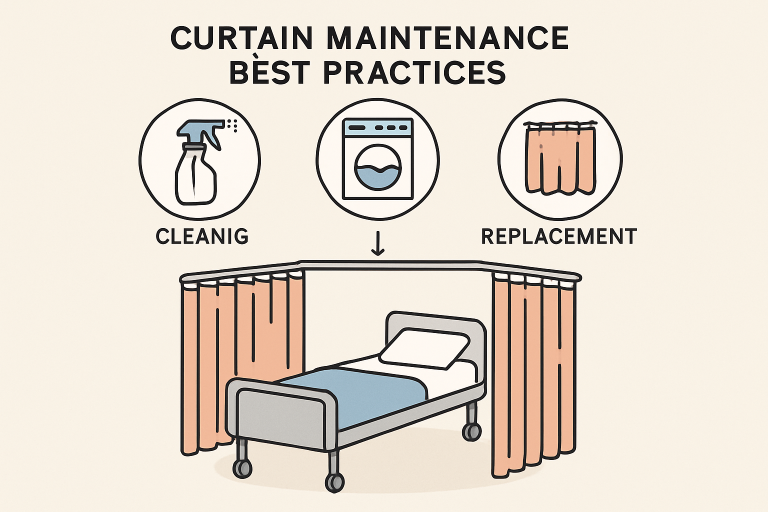
Implementing a structured cleaning and maintenance protocol is vital for managing contamination risks. Hospitals should adopt a multi-pronged approach to curbing hygiene and maintenance. Best practices include:
- Daily Disinfection: Target high-touch areas of curtains with EPA-registered disinfectants to help break the chain of transmission for pathogens that frequently reside on fabric surfaces.
- Biweekly Laundering: All curtains should be removed and laundered every 14 to 30 days with detergents and disinfectants proven effective in healthcare environments, which research has shown can reduce microbial burden by up to 80 percent.
- Immediate Replacement: Whenever a curtain becomes visibly soiled or is used in a setting with a high-risk exposure (such as an isolation room), it must be replaced promptly to eliminate the threat of transmission.
Adopting these scheduling protocols enables hospitals to drastically lower the risk of infection and contributes to a safer healing environment.
Compliance with Regulatory Standards
Following national and international cleaning standards is crucial for healthcare environments. Regulatory agencies including the CDC, Occupational Safety and Health Administration (OSHA), and the Healthcare Laundry Accreditation Council (HLAC) have set specific benchmarks for hospital textile decontamination.
- Launder curtains at a minimum temperature of 160°F for at least 25 minutes. This meets CDC thermal disinfection requirements and ensures the majority of microorganisms are killed.
- Use phthalate-free, medical-grade detergents that comply with HLAC recommendations. These are less likely to cause fabric damage or trigger allergic reactions.
- Keep comprehensive logs of cleaning and replacement activity in accordance with OSHA’s bloodborne pathogens standard to guarantee traceable practices.
Healthcare facilities that closely adhere to these guidelines have consistently seen lower contamination rates and improved outcomes for both patients and staff.
Implementing Disposable Curtains
As a proactive infection control measure, many hospitals are transitioning to disposable privacy curtains. Using these single-use curtains brings a host of benefits:
- Dramatically reduced laundry bills and manual handling costs.
- Effective containment of pathogens, as contaminated curtains can be quickly discarded and replaced.
- Quicker turnaround for room readiness, an important factor during high patient influxes.
- Ideal for use in isolation rooms and other high-risk zones where infection prevention is critical.
The move toward disposables can streamline operations, reduce labor, and significantly minimize the risk of healthcare-associated outbreaks.
Staff Training and Handling Protocols
Achieving high standards in curtain hygiene hinges on proper training and strict adherence to proven handling protocols:
- Immediately identify and safely remove curtains that are visibly soiled, contaminated, or have come into contact with infectious material.
- Prevent cross-contamination by ensuring staff do not touch clean curtains with contaminated gloves or hands during the replacement process.
- Use best practices for the transportation and disposal of dirty curtains, whether for transport to the laundry or for disposing of single-use products.
Consistent, comprehensive staff training programs help ensure that safe handling techniques become second nature throughout the entire facility. Training also encourages accountability and compliance with established policies, which are essential in high-turnover, high-risk environments.
Utilizing Quick-Change Curtain Systems
Upgrading to modern, quick-change cubicle curtain systems represents another effective strategy for healthcare facilities. These innovative track systems allow for rapid curtain removal and installation, which has several distinct benefits:
- Significantly faster curtain changes, reducing downtime between patients.
- Lower labor requirements, freeing up staff for other essential tasks.
- Improved room turnaround times, enhancing patient satisfaction and facility throughput.
- Ensured compliance by making systems easier for staff to follow protocol.
- Minimized contamination risk, with less direct handling required during the change process.
The efficiency of quick-change systems helps healthcare facilities maintain rigorous hygiene standards without adding extra strain on resources, providing a strong return on investment while promoting a safer patient environment.
Final Thoughts
Effectively cleaning and maintaining hospital cubicle curtains is a cornerstone of infection control in modern healthcare settings. By implementing structured cleaning schedules, adhering to regulatory standards, adopting disposable solutions, providing robust staff training, and adopting newer quick-change technologies, hospitals can dramatically reduce the risks posed by contaminated curtains. High standards for curtain management not only protect patients and staff but also enhance the overall operational efficiency of healthcare facilities.