
News
Sustainable Materials Management in Construction: Paving the Way for a Greener Future

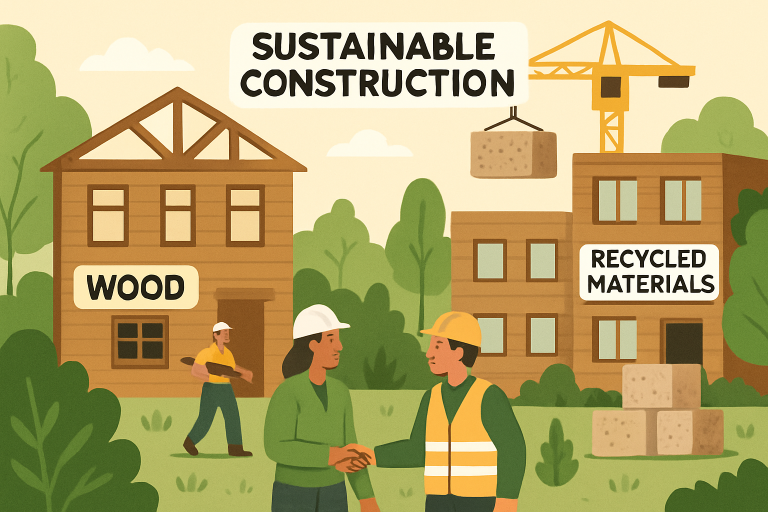
The push for sustainability within the construction industry has shifted how projects are envisioned and executed globally. Today, builders and developers are increasingly focusing on sustainable materials management—an approach that prioritizes resource efficiency from inception to completion and beyond. By doing so, industry leaders are driving unprecedented reductions in carbon footprints while improving bottom lines and enhancing community trust. Companies dedicated to advancing material customer experiences services play a crucial role in aligning these sustainability ambitions with practical, project-specific solutions.
Adopting sustainable materials management is about future-proofing the built environment, ensuring healthier spaces, and promoting economic growth through responsible resource use. Benefits reach beyond the environment, supporting economic stability and social welfare. By utilizing recycled content, natural products, and digital platforms that minimize waste, these practices promote sustainable construction now and in the future.
As cities grow and demographic pressures rise, the construction sector faces the challenge of meeting infrastructure needs while reducing ecological impacts. Innovations in product design, material tracking, and digital marketplaces for surplus materials are driving the adoption of circular building practices. To understand how sustainable materials management is transforming our world, it is crucial to explore key themes, case studies, and trends.
Understanding Sustainable Materials Management
Sustainable materials management is the practice of optimizing the use and distribution of resources throughout a building’s entire lifecycle. This means considering the impact of raw material extraction, transportation, processing, installation, operational use, and eventual repurposing or recycling. By designing for durability, adaptability, and reusability, stakeholders can dramatically reduce waste sent to landfills while conserving non-renewable resources and fostering a healthier environment. Thoughtful, sustainable management encourages collaboration by integrating architects, engineers, suppliers, and policymakers to create smarter solutions that extend beyond the project site.
These principles are gaining global traction as environmental regulations become stricter and consumer awareness increases. Leading organizations have begun tracking the embodied carbon of their projects, setting internal standards for recycled content, and prioritizing suppliers committed to sustainability. This holistic strategy enables the development of structures that align with international sustainability goals, such as the United Nations Sustainable Development Goals (SDGs), particularly those focused on responsible consumption and climate action.
Innovative Materials in Modern Construction
Material innovation is transforming the construction industry from a resource-intensive sector into a driver of climate solutions. Mass timber, such as cross-laminated timber (CLT), is making headlines for its natural ability to sequester carbon while providing structural strength comparable to that of concrete and steel, but with a significantly lighter environmental footprint. The forthcoming Stockholm Wood City is a compelling example, envisioning the world’s largest urban development built entirely of wood, significantly reducing emissions during its construction phase.
On another front, the integration of advanced recycled plastics is helping to close the loop in the plastics economy. Techniques such as vacuum-sealed chainmail structures made from recycled filaments are proving to be adaptable and resilient, offering viable alternatives to traditional, resource-heavy materials. The ongoing research in this area shows considerable promise for transforming post-consumer waste into high-performance infrastructure components and building elements.
Case Studies of Sustainable Construction
Real-world examples demonstrate the effectiveness of these strategies. Near Nairobi, Kenya, a pioneering mushroom farm produces mycelium-based panels that serve as both insulation and structural material. This innovation not only uses agricultural waste as a feedstock but also delivers an affordable and biodegradable building solution. Projects like these underscore the global impact of sustainable construction and its potential to mitigate resource scarcity in developing economies.
In the U.S., Meta—formerly Facebook—has begun integrating mass timber into its data center designs, kicking off a shift away from energy-intensive materials. By replacing steel and reinforced concrete with timber, the company anticipates reducing embodied carbon by approximately 41% in targeted projects, establishing a benchmark for the tech sector and beyond.
Economic and Environmental Benefits
The benefits of prioritizing sustainable materials are measurable and wide-reaching. From an environmental standpoint, reducing embodied carbon and minimizing landfill waste are significant contributions toward achieving a net-zero future. From an economic perspective, the global sustainable construction materials market is projected to reach $734.9 billion by 2032, delivering significant cost savings through increased efficiency and reduced long-term resource expenditure. This growth highlights the sector’s pivotal role in fostering resilient, future-ready economies.
Businesses that embrace sustainable materials management also enhance their reputation and strengthen relationships with environmentally conscious clients. Moreover, many government contracts and large corporate projects now mandate stringent environmental standards for material sourcing, further incentivizing investment in sustainable products and practices.
Challenges and Solutions
Despite clear advantages, difficulties remain for widespread adoption. Common hurdles include higher upfront costs, supply chain uncertainties, and variable performance characteristics in emerging materials. Yet, technological advancements are overcoming many of these roadblocks. Bio-inspired engineering is helping to reduce variability in the properties of recycled plastics. At the same time, digital tracking systems provide builders with greater transparency and control over material sourcing and lifecycle impacts.
Initiatives that pool resources and knowledge, such as industry-wide databases and collaborative research networks, also help accelerate progress by sharing best practices and successful implementations. The path to mainstream adoption ultimately depends on broad collaboration and the willingness to invest in long-term gains over short-term savings.
Future Trends in Sustainable Construction
Looking ahead, the sector is moving towards digital marketplaces and open platforms that support the exchange of surplus and reclaimed building materials, reducing unnecessary waste and making circular construction models more accessible. These virtual tools facilitate better resource planning, transparency, and traceability, enabling designers and contractors to make more sustainable choices at every stage. As digital adoption accelerates, expect further integration of life-cycle assessment frameworks into standard practice and broader policy support for sustainable procurement.
Additionally, advancements in low-carbon cements, adaptive reuse design principles, and nature-inspired construction methods are poised to reduce the environmental impact of future buildings further. The intersection of technology, policy, and market demand is accelerating the shift towards greener, smarter construction everywhere.
Conclusion
Sustainable materials management is crucial to the construction industry’s evolution, balancing growth with responsibility. By embedding sustainability into every link of the value chain, builders can deliver projects that not only meet current needs but also safeguard resources and well-being for future generations. As innovation continues and collaborative solutions arise, a climate-resilient, economically stable built environment is becoming a tangible reality.