
Entertainment
The Secret Codes Behind Star Wars Movie FX: How the Galaxy Came to Life

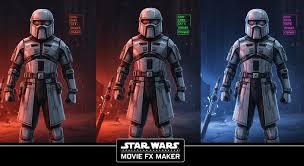
Since its debut in 1977, Star Wars has stood as a symbol of revolutionary filmmaking and groundbreaking visual effects. From the hum of a lightsaber to the detailed planetary landscapes of Tatooine and Coruscant, the Star Wars franchise has always been ahead of its time — largely thanks to the powerful combination of creative vision and technical wizardry.
1. The Origins of Star Wars FX Magic
When George Lucas founded Industrial Light & Magic (ILM) in 1975, digital effects were practically science fiction themselves. ILM’s “code” wasn’t purely digital at first — it began as a mix of engineering, motion control systems, and photographic effects. Early FX were coded manually using analog control boards and computers like the Dykstraflex, one of the first motion-control systems ever used in cinema.
The “FX Maker Codes” of the time were not lines of software as we know them today, but rather a system of programmed camera movements — precise instructions that told cameras and models how to move frame by frame.
2. The Digital Revolution in Star Wars
By the time Star Wars: Episode I – The Phantom Menace (1999) arrived, the entire FX industry had shifted toward digital production. ILM started writing complex proprietary software, or “FX codes,” to simulate light, textures, physics, and even crowd behavior.
Some of these internal ILM tools included:
- Zeno: ILM’s proprietary 3D application used to create photorealistic environments and models.
- Sabre: A digital code-based simulation tool used to generate the glowing blades of lightsabers and reflection effects.
- Plume: A specialized particle system that simulates smoke, explosions, and atmospheric dust in battles.
Each program relied on layers of algorithms “coded” to mimic real-world physics — gravity, motion blur, and material reflection — but on a cosmic scale.
3. Sound FX Coding: The Hidden Layer
The audio side of Star Wars also had its own “FX coding.” Sound designer Ben Burtt essentially built an acoustic catalog of the galaxy. When sound engineers transitioned to digital tools, they began encoding original analog recordings — like the hum of an old projector (used for lightsabers) — into digital audio processors.
Modern versions of these sound FX use digital signal processing (DSP) codes to recreate, modify, and layer sound in immersive surround formats such as Dolby Atmos.
4. The Modern Era: Real-Time FX Coding and AI Tools
Today’s Star Wars productions — from The Mandalorian to Ahsoka — rely heavily on real-time FX rendering tools like Unreal Engine. This software allows artists to code light, environments, and motion live on set using massive LED walls in technology known as StageCraft.
These real-time FX codes mean directors can preview space battles, alien planets, or hyperspace jumps before final rendering. Artificial intelligence further enhances this process, analyzing lighting, color, and perspective to auto-correct scenes and improve realism.
5. The Future of FX Codes in the Star Wars Galaxy
As technology continues to evolve, so does the FX code behind Star Wars. The next generation of artists at ILM are developing machine-learning models, procedural scripting, and physics-based rendering codes that will further blend the boundaries between reality and fiction.
One thing remains certain — whether controlled by analog boards in 1977 or machine learning in 2024 — it’s the blend of art and code that keeps Star Wars visually timeless.
In short:
The “Star Wars FX Maker Codes” aren’t a single piece of software, but an evolving tapestry of innovations — coded systems that push cinema’s boundaries, one frame at a time.