
Tech
Global Supply Chain News and Updates: Key Trends Shaping International Trade in 2026

Published
7 minutes agoon
By
Realty Fact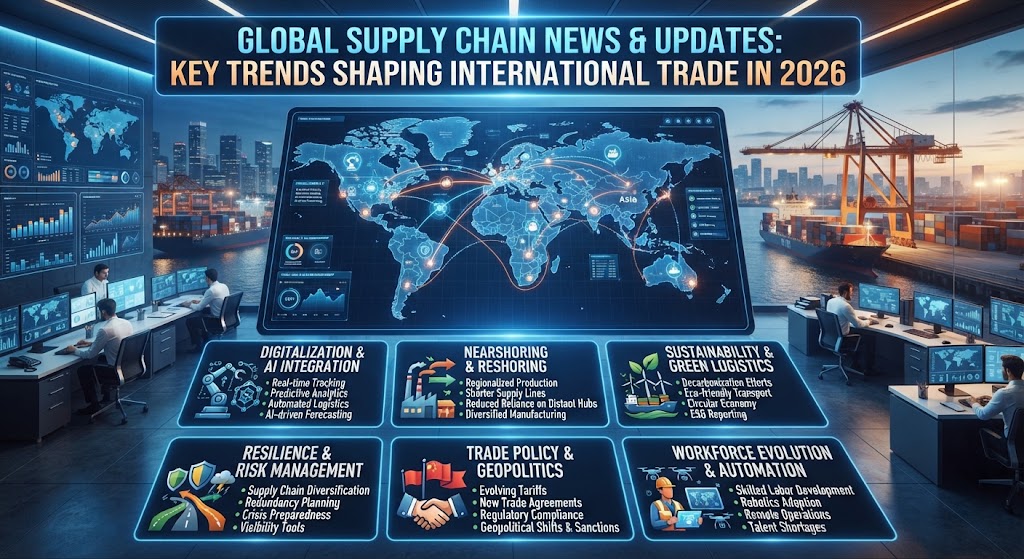
Global supply chains play a critical role in the modern economy, connecting manufacturers, suppliers, shipping companies, retailers, and customers across different countries. From raw materials and electronic components to food, clothing, and consumer products, international supply networks help businesses move goods efficiently worldwide.
In 2026, global supply chain news focuses on shipping disruptions, shifting trade policies, transportation costs, artificial intelligence, and companies’ efforts to build more resilient logistics networks. Businesses are adjusting their sourcing strategies and delivery plans to manage uncertainty while maintaining reliable operations.
For companies that depend on international suppliers, understanding these developments is essential for controlling costs, reducing delays, and making better business decisions.
Table of Contents
ToggleLatest Global Supply Chain News and Updates
Recent developments highlight how quickly international supply networks can change. Businesses are facing a combination of geopolitical uncertainty, shipping challenges, and changing demand across major markets.
Shipping Routes and Maritime Disruptions
Shipping routes remain a major concern for global supply chains. Disruptions around important maritime corridors can affect delivery schedules, insurance costs, fuel expenses, and the availability of shipping capacity.
On October 14, 2026, Reuters reported that security risks around the Strait of Hormuz were affecting commercial shipping and energy supply networks. The situation illustrates how geopolitical tensions can create uncertainty for companies transporting oil, gas, industrial materials, and other goods. Read the Reuters report.
When a major shipping corridor becomes difficult to navigate, carriers may consider alternative routes. Longer journeys can increase fuel consumption, delay deliveries, and raise transportation costs.
Businesses can reduce their exposure by monitoring carrier advisories, reviewing alternative shipping options, and maintaining realistic delivery schedules.
Global Trade Forecasts and Supply Chain Resilience
International trade continues to adapt to changing economic and political conditions. According to an October 2026 report from the World Trade Organization, merchandise trade volumes were forecast to grow by 3.9% in 2026, an upward revision from its earlier projection of 1.9%.
The revised outlook reflects stronger-than-expected trade activity and the ability of businesses to adapt to disruptions. AI-related goods, including semiconductors and servers, were also identified as important contributors to trade growth. Read the report coverage.
These developments show that supply chain disruptions do not always stop international trade. Companies can respond by changing suppliers, rerouting shipments, and adjusting inventory plans.
However, overall trade growth does not mean that every industry or region will experience the same conditions. Businesses should evaluate developments that directly affect their products, suppliers, and shipping routes.
Trade Agreements and Changing Supplier Relationships
Trade agreements can influence where companies source products, how much they pay for imported materials, and which markets offer the best opportunities.
On October 9, 2026, the Associated Press reported that the European Union and China had reached a preliminary trade understanding involving market access and measures intended to stabilize rare-earth supply chains. The agreement remained subject to further approval and implementation.
Rare-earth materials are important for various technologies, including electronics, electric vehicles, and industrial equipment. Changes in their availability can affect manufacturers that rely on specialized components.
Businesses should monitor trade policy announcements, tariff changes, customs requirements, and supplier agreements before making major purchasing decisions.
Why Global Supply Chain Costs Remain Important
Supply chain costs affect product pricing, profit margins, and customer satisfaction. Even when a company purchases goods at competitive prices, unexpected expenses during transportation or customs processing can reduce profitability.
Transportation and Freight Expenses
Freight expenses depend on fuel prices, shipping capacity, demand, route availability, port congestion, and the type of goods being transported.
Reuters reported on October 12, 2026, that OPEC and non-OPEC ministers had raised concerns about increased shipping and insurance costs associated with energy transportation. Read the report.
Higher freight costs can affect manufacturers, importers, wholesalers, and online retailers. Businesses may respond by negotiating longer-term carrier agreements, consolidating shipments, or comparing alternative transport methods.
Nevertheless, changing routes or carriers should be evaluated carefully because a lower quoted freight rate does not always mean a lower total delivery cost.
Port Congestion and Delivery Delays
Port congestion can create delays when vessels must wait for berths, cargo handling capacity is limited, or documentation is incomplete.
Kuehne+Nagel’s October 13, 2026, operational update reported congestion and vessel delays at several international locations, highlighting the need for businesses to monitor individual ports rather than assume that all shipping routes operate under the same conditions. View the port update.
Delays can affect production schedules when factories depend on components arriving at specific times. Retailers may also experience stock shortages if shipments miss important sales periods.
To prepare, companies should track shipments, confirm documentation requirements, communicate with logistics providers, and allow sufficient time for unexpected delays.
The Effect of Supply Chain Costs on Product Prices
When shipping, insurance, storage, or raw-material costs increase, businesses must decide whether to absorb the additional expense or pass some of it on to customers.
For small businesses operating with limited margins, even modest cost increases can affect profitability.
Companies can improve cost control by reviewing supplier contracts, reducing unnecessary storage expenses, forecasting demand more accurately, and comparing the total cost of sourcing from different locations.
Major Global Supply Chain Trends in 2026
Several important trends are influencing how businesses manage international logistics and purchasing.
Artificial Intelligence in Supply Chain Management
Artificial intelligence is becoming an important technology for supply chain planning. AI-powered systems can analyze demand patterns, identify potential disruptions, assist with inventory forecasting, and help businesses organize logistics information.
For example, a distributor may use forecasting software to estimate future demand and identify products that could run out of stock. A manufacturer might use predictive analytics to help schedule purchases of raw materials.
AI can support faster analysis, but its recommendations depend on the quality and completeness of the available data. Businesses should verify important forecasts and maintain human oversight.
Diversification of Suppliers
Many companies are examining whether relying on a single supplier or country creates unnecessary risk.
Supplier diversification involves identifying alternative sources for important materials and products. This may help companies respond when a supplier experiences production problems, transport delays, or changes in trade regulations.
However, adding suppliers can increase administrative work, quality-control requirements, and purchasing costs. Companies should evaluate alternatives according to reliability, product quality, delivery performance, and total cost.
Greater Supply Chain Visibility
Supply chain visibility means knowing where goods are, how shipments are progressing, and whether a potential problem could affect delivery.
Digital tracking platforms can combine shipment updates, inventory information, and supplier communications in one place.
Better visibility allows businesses to respond more quickly to delays and provide more accurate delivery information to customers.
Companies do not necessarily need expensive technology to begin improving visibility. Standardized shipment records, clear supplier communication, and reliable tracking procedures can provide a useful starting point.
Sustainable Logistics and Environmental Goals
Sustainability remains relevant as companies review transportation methods, packaging materials, energy consumption, and waste reduction.
Businesses may explore better shipment consolidation, reusable packaging, more efficient warehouse operations, and lower-emission transportation options where practical.
Sustainable supply chain decisions should consider both environmental impact and operational requirements. A change that reduces emissions but creates significant delays or additional waste may require further evaluation.
How Supply Chain Disruptions Affect Small Businesses
Large companies may have extensive logistics teams and multiple suppliers, but smaller businesses often operate with tighter budgets and fewer alternatives.
A delayed shipment can prevent a retailer from fulfilling orders. A shortage of components can interrupt production. An unexpected increase in freight costs can make an otherwise profitable product less attractive.
Small businesses can strengthen their operations through several practical measures.
Build relationships with alternative suppliers. Identify potential backup suppliers for essential products and materials before an emergency occurs.
Monitor inventory carefully. Use historical sales and expected delivery times to determine when to reorder important products.
Review supplier performance. Track delivery reliability, product quality, communication, and pricing rather than evaluating suppliers only on purchase price.
Plan for unexpected costs. Include reasonable allowances for freight changes, insurance, storage, and other potential expenses.
Communicate with customers. Provide realistic delivery estimates and inform customers promptly when unexpected delays occur.
These steps cannot eliminate every disruption, but they can help businesses respond more effectively.
How Businesses Can Prepare for Future Supply Chain Disruptions
Preparation begins with understanding where a company is most vulnerable.
Businesses should identify critical products, important suppliers, major shipping routes, and materials that are difficult to replace. This information helps management prioritize its risk-reduction efforts.
Companies can then develop contingency plans for common scenarios, such as supplier shutdowns, transportation delays, sudden increases in freight costs, or changes in import regulations.
Regular communication is also important. Purchasing teams should maintain contact with suppliers, while logistics teams should monitor carrier notices and port conditions.
Finally, businesses should review their plans regularly. Supply chain risks change as market conditions, trade policies, and customer demand evolve.
A flexible strategy can help companies maintain service quality without committing unnecessary resources to excessive inventory or expensive alternatives.
The Future of Global Supply Chains
The future of global supply chains will likely involve greater use of digital tools, continued supplier diversification, and more attention to logistics risk.
AI-assisted forecasting and shipment tracking may help companies make decisions using more timely information. Businesses may also continue evaluating alternative sourcing locations and transportation routes to reduce dependence on vulnerable parts of their networks.
At the same time, international trade will remain influenced by economic growth, government policies, geopolitical conditions, energy prices, and consumer demand.
No single strategy can eliminate all supply chain risks. Businesses that combine reliable data, careful supplier management, practical contingency planning, and regular performance reviews will be better positioned to navigate uncertainty.
Conclusion
Global supply chain news and updates provide valuable information for businesses that depend on international trade. Shipping disruptions, freight costs, trade agreements, port congestion, and technological developments can all influence the movement of goods around the world.
In 2026, companies are adapting to these challenges by exploring alternative suppliers, improving shipment visibility, using digital planning tools, and strengthening their risk-management strategies.
For small businesses and large organizations alike, the priority should be building supply chains that are reliable, flexible, and financially sustainable. Staying informed about international developments can help business leaders identify potential problems earlier and make better operational decisions.
Frequently Asked Questions
What is happening in global supply chains in 2026?
Major issues include shipping disruptions, changing trade policies, freight costs, port congestion, supplier diversification, and increased interest in AI-assisted logistics planning.
What causes global supply chain disruptions?
Common causes include geopolitical tensions, natural disasters, transportation delays, labor disputes, supplier shutdowns, changing trade regulations, and unexpected increases in demand.
How do shipping costs affect global supply chains?
Higher shipping costs can reduce profit margins, increase inventory expenses, and raise the final price of imported goods. Businesses may respond by negotiating freight contracts, consolidating shipments, or evaluating alternative routes.
How can small businesses manage supply chain risks?
Small businesses can identify backup suppliers, monitor inventory, track shipments, maintain clear supplier communication, and prepare contingency plans for unexpected disruptions.
How is AI changing supply chain management?
AI can help businesses forecast demand, analyze logistics data, monitor inventory, and identify potential problems. Its effectiveness depends on reliable data and appropriate human oversight.
Why is supplier diversification important?
Supplier diversification reduces dependence on a single source. It can provide alternatives when a supplier faces production difficulties, transportation delays, or regulatory changes.
Where can businesses find global supply chain news?
Businesses can follow reputable sources such as Reuters, the World Trade Organization, Maersk market updates, Supply Chain Dive, and logistics providers’ operational reports.
SEO Meta Title: Global Supply Chain News and Updates: 2026 Trends
Meta Description: Explore global supply chain news and updates for 2026, including shipping disruptions, freight costs, trade policies, AI, logistics, and business risk management.
URL Slug: global-supply-chain-news-and-updates
Primary Keyword: Global supply chain news and updates
Secondary Keywords: global supply chain news 2026, supply chain disruptions, international shipping news, global logistics updates, freight costs, supply chain management trends, global trade news.
Suggested Tags: Global Supply Chain, Business News, Logistics, International Trade, Shipping News, Supply Chain Management, Global Economy