
Lifestyle
How to Bring a Tired Lawn Back to Life in 2026

Key Takeaways
- Thin grass can signal compacted soil, shade, drought stress, pests, poor drainage, or improper mowing.
- Late summer and early fall are often strong repair windows for cool-season lawns.
- Seed-to-soil contact is more important than simply applying extra seed.
- A soil test can prevent unnecessary lime or fertilizer applications.
- New seed needs consistent moisture, followed by gradual changes that encourage deeper roots.
- Lasting results depend on follow-up care as much as the day the seed is spread.
A thin, patchy lawn is usually a symptom, not the whole problem. Heat, compacted soil, shallow watering, shade, insects, weeds, mowing habits, and drainage can all weaken turf over time. The most reliable repair plan begins by finding out why the grass struggled in the first place.
For homeowners who want local help evaluating bare areas and preparing soil for new grass, seeding service for thinning lawns Northern New Jersey is a useful resource from Greener Lawns. Based in Millington, New Jersey, Greener Lawns provides organic, chemical-free lawn care and repair services that combine seeding, aeration, and natural fertility support. Its lawn repair page is especially relevant for properties in Millington, Summit, Chatham, Morristown, and nearby communities where compacted soil, traffic, and seasonal weather can leave lawns thin.
Why Lawns Become Thin and Patchy
A lawn can look brown or sparse for many reasons. Some summer browning is temporary dormancy, especially during dry weather, while truly dead turf will not recover when moisture and cooler temperatures return. Look for patterns. Damage to driveways and sidewalks may be due to heat or salt exposure. Bare paths often point to foot traffic and compaction. Circular patches may suggest disease, while irregular thinning beneath trees can be caused by shade and root competition.
Recent construction, a change in drainage, a new pet area, or a hot, dry summer can also quickly shift lawn conditions. Before treating the surface, consider what changed in the yard.
Start With a Simple Lawn Inspection
- Walk the property and note every thin or bare section.
- Track how much direct sun each problem area receives.
- Press a screwdriver into the ground. Hard soil can indicate compaction.
- Check for weeds, moss, excessive thatch, insect activity, and discolored grass blades.
- Watch how water behaves after rain or irrigation. Puddling and runoff both matter.
- Take a soil sample if the lawn has struggled for more than one growing season.
Soil testing is particularly helpful when growth has been poor despite regular care. The Rutgers Soil Testing Laboratory guides New Jersey homeowners seeking a clearer picture of soil pH and nutrient needs.
Choose Between Spot Repair, Overseeding, and Renovation
Not every weak lawn needs a complete restart. The right approach depends on how much healthy grass remains and whether the underlying issue has been corrected.
- Spot repair: Best for isolated bare patches caused by pets, traffic, small pest problems, or damaged turf.
- Overseeding: A practical option when desirable grass still covers much of the lawn, but density is poor.
- Renovation: Often the better choice when weeds dominate, soil is severely compacted, or most existing turf is failing.
Pick the Right Seeding Window
For many Northern New Jersey lawns, late summer and early fall give cool-season grass a favorable chance to establish. Soil remains warm enough for germination, while cooler air reduces stress on young plants. Spring seeding can work, but new grass may face stronger weed competition and summer heat before roots are fully developed.
The weather should still guide the final schedule. Avoid seeding in extreme heat, saturated soil, or during periods when watering cannot be managed responsibly. A helpful overview of seasonal mowing, feeding, and establishment practices is available through Penn State Extension’s lawn management guide.
Prepare Soil Before Spreading Seed
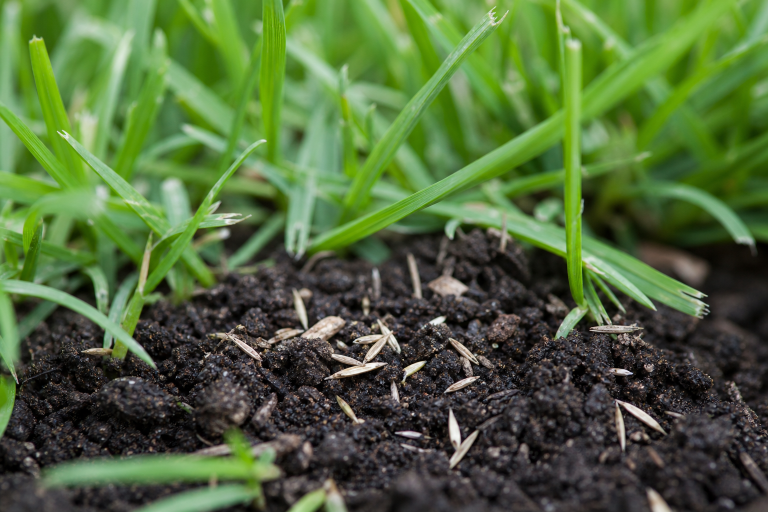
Good seed cannot overcome poor contact with the soil. Remove heavy leaf cover, sticks, and loose debris. Mow the existing grass, then rake thin areas lightly so the seed can settle near the exposed soil. If the ground is hard and compacted, core aeration can create channels for air, moisture, and roots.
Do not apply lime or large fertilizer doses based on guesswork. Soil test results, site conditions, and the needs of the selected grass should shape those decisions. Correcting drainage, redirecting downspouts, or reducing repeated traffic may also be necessary before seeding.
Match Grass Seed to the Site
One bargain seed mix is not ideal for every section of a yard. Sunny, dry areas need grass with better drought tolerance. Tree-covered sections need varieties that can handle reduced light. Play areas and walkways need durable turf that can recover from wear. Read the seed label, check for suitable grass types, and avoid choosing solely by price.
Water, Mow, and Protect Young Grass
During germination, keep the seedbed consistently moist without turning it muddy. Short watering cycles may be more effective than one long session if water begins to run off. Water early in the day when possible, and skip irrigation after meaningful rainfall. As seedlings grow, water less often but more deeply to encourage roots to move downward.
Wait until the new grass is tall enough for a light first cut. Use a sharp mower blade, mow only when the surface is reasonably dry, and remove a small portion of the blade at a time. Keep children, pets, equipment, and frequent foot traffic away from repaired areas until the turf has begun to fill in.
Common Lawn Repair Mistakes to Avoid
- Seeding during severe heat without a dependable watering plan.
- Ignoring compaction, pests, shade, drainage, or disease.
- Using a seed that does not fit the site’s sunlight and traffic conditions.
- Applying too much seed can create crowded, weak seedlings.
- Adding fertilizer or lime without understanding the soil.
- Mowing young grass too early or too short.
When to Call for Professional Help
Professional guidance can save time when bare soil is widespread, seeding repeatedly fails, pests return, drainage is poor, or heavy shade limits options. Ask whether the cause of damage will be inspected, what seed is appropriate, how watering should be handled, and what follow-up care is included. For families, it is also reasonable to ask whether the proposed approach is suitable for children, pets, and local water conditions.
Frequently Asked Questions
Can a thin lawn be repaired without removing all the grass?
Yes. Overseeding can improve density when enough healthy turf remains, and the reason for thinning has been addressed.
Is fall better than spring for seeding?
Fall is often preferred for cool-season grass because temperatures are milder and weed pressure can be lower. Local weather and soil moisture still matter.
Does aeration help new seeds grow?
Aeration can improve access to soil, water, and air in compacted areas. It supports repair, but it will not solve shade, drainage, or pest problems on its own.
How long does lawn repair take?
Some seed may germinate within days, but a durable lawn takes several weeks or longer. Seed type, temperature, soil condition, and aftercare all affect the timeline.
Conclusion
A tired lawn can become thicker and more resilient when repair starts with diagnosis. Inspect the site, correct the cause, prepare the soil, choose suitable seed, and give new grass consistent care. The goal is not simply to fill bare spots, but to build a lawn that is better prepared for the next season.