
Tech
How to Specify the Right Transformer for a Commercial or Industrial Facility

Published
2 months agoon
By
Realty Fact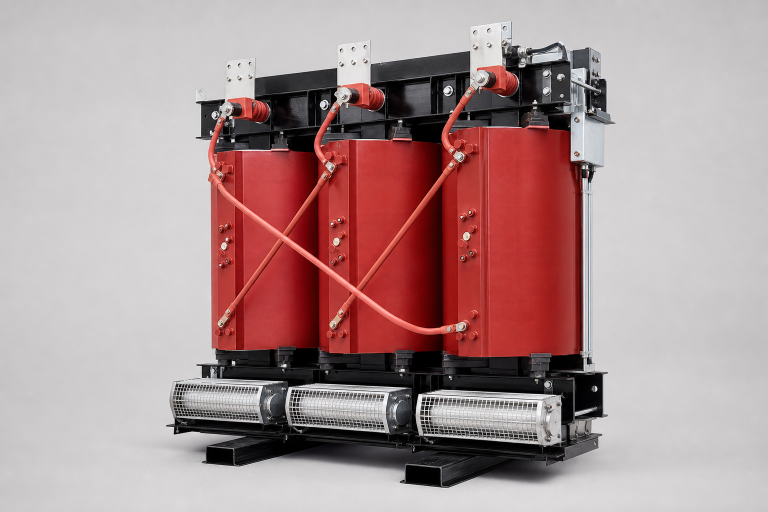
Selecting a transformer is a system-design decision, not simply a matter of choosing a kVA rating. Facility teams must match electrical demand, voltage, environmental conditions, protection requirements, and anticipated growth. Reviewing the options offered by a transformer manufacturer can help establish the terminology, but the final specification should be based on documented site conditions and engineering analysis.
At its core, a transformer transfers alternating-current energy between circuits while changing voltage levels through electromagnetic induction. Understanding the basic transformer operating principle helps explain why the primary voltage, secondary voltage, frequency, winding arrangement, and load profile must work together.
Table of Contents
ToggleWhy Transformer Specification Matters
A poorly matched transformer can overheat, create unacceptable voltage drop, contribute to nuisance trips, or limit future operations. For example, a manufacturing area may initially operate within its transformer capacity but later add motors, drives, and process equipment that change both peak demand and power quality.
Transformer selection also affects equipment beyond the transformer itself, including switchgear, overcurrent protection, conductors, grounding arrangements, ventilation, and installation space. For projects involving several interconnected components, coordination with an electric equipment manufacturer may help project teams identify interface requirements early without treating the transformer as an isolated purchase.
Start With Accurate Load Data
Load information should come before choosing a transformer type or nominal size. Gather total connected load, expected peak demand, typical operating demand, power factor, continuous loads, motor-starting requirements, nonlinear loads, and planned expansion during the next five to ten years. Utility bills alone rarely show short-duration peaks or the operational differences between shifts.
Useful Sizing Calculations
- Single-phase: kVA = volts × amps ÷ 1,000.
- Three-phase: kVA = volts × amps × 1.732 ÷ 1,000.
- When watts are known: kVA = watts ÷ power factor ÷ 1,000.
These calculations provide a starting point, not a final design. Undersizing can reduce reliability, while excessive oversizing can increase first cost and no-load energy losses. A qualified electrical professional should review the final load study, fault-duty implications, and coordination requirements.
Check Voltage And Frequency
Confirm every electrical value before issuing a specification. Verify the utility or service primary voltage, required secondary voltage, phase configuration, and operating frequency. Review equipment nameplates and one-line drawings rather than relying on informal descriptions such as “480 service” or “medium voltage.”
- Confirm primary and secondary voltages, including neutral and grounding needs.
- Verify single-phase or three-phase operation.
- Identify required taps and the expected voltage variation.
- For medium-voltage applications, confirm insulation level and fault-current data.
Choose Type And Design
The transformer type should follow the application. Single-phase units often support smaller loads, while three-phase units are common for commercial distribution, motors, and industrial processes. Step-down transformers serve lower-voltage equipment, step-up units support selected generation applications, and isolation, control, and instrument transformers meet more specialized needs.
Dry-Type Versus Liquid-Filled
- Dry-type transformers are frequently considered for indoor rooms and enclosed spaces. They commonly rely on air cooling or solid insulation systems and may simplify routine maintenance.
- Liquid-filled transformers are often used outdoors, in substations, and for larger-capacity installations. Their specification should address fluid type, containment, inspections, and fire-planning requirements.
- The better choice depends on capacity, available ventilation, location, local code, maintenance access, environmental exposure, and site-specific fire protection measures.
Account For Site Conditions
Installation conditions can materially change a transformer specification. Ambient temperature, altitude, humidity, condensation, dust, chemicals, salt air, flood exposure, seismic demands, vibration, and enclosure rating should all be identified. Indoor installations also require adequate clearance, airflow, noise control, and access for delivery, inspection, and eventual replacement.
Review Harmonics And Inrush
Nameplate load does not reveal the full electrical duty. Variable-frequency drives, rectifiers, welders, battery charging systems, data equipment, and other nonlinear loads can introduce harmonic current and additional heating. Large motors can also produce substantial inrush current during starting.
Ask whether several motors may start together, whether sensitive electronics share the secondary, and whether loads change rapidly. Depending on the findings, the design may require a harmonic-rated transformer, added thermal capacity, reduced-voltage motor starting, or a formal power-quality study.
Consider Efficiency And Lifecycle Cost
Purchase price should be evaluated alongside no-load losses, load losses, operating hours, electricity rates, cooling needs, maintenance, downtime exposure, and likely future expansion. Because many transformers remain energized continuously, modest no-load losses can accumulate over years of service. Current distribution transformer efficiency requirements should be reviewed when selecting equipment within covered product categories.
Prepare Documentation And Specifications
A complete specification package reduces revisions and avoids mismatched assumptions. Include the transformer duty, kVA rating, primary and secondary voltages, phase, frequency, load characteristics, expected growth, installation environment, noise limits, and delivery constraints. Also request certified drawings, nameplate data, routine test reports, impedance and ratio results, insulation information, temperature-rise data, installation instructions, and applicable fluid documentation.
Common Questions
How Much Extra Capacity Is Appropriate?
There is no universal percentage. The appropriate margin depends on forecasted load growth, motor starting, harmonic heating, ambient conditions, redundancy goals, and the cost of an outage.
Should Copper Or Aluminum Windings Be Chosen?
Both can be appropriate when properly designed. Compare physical size, weight, connection practices, thermal performance, cost, and maintenance expectations instead of treating either material as universally superior.
Who Should Approve The Final Specification?
A licensed electrical engineer or qualified power-systems professional should review final selections, particularly for medium-voltage systems, critical facilities, high fault-current environments, or major industrial loads. Careful specification based on accurate data supports dependable operation throughout the transformer’s service life.