
News
What Is a Content Roadmap? A Complete Guide to Planning Content

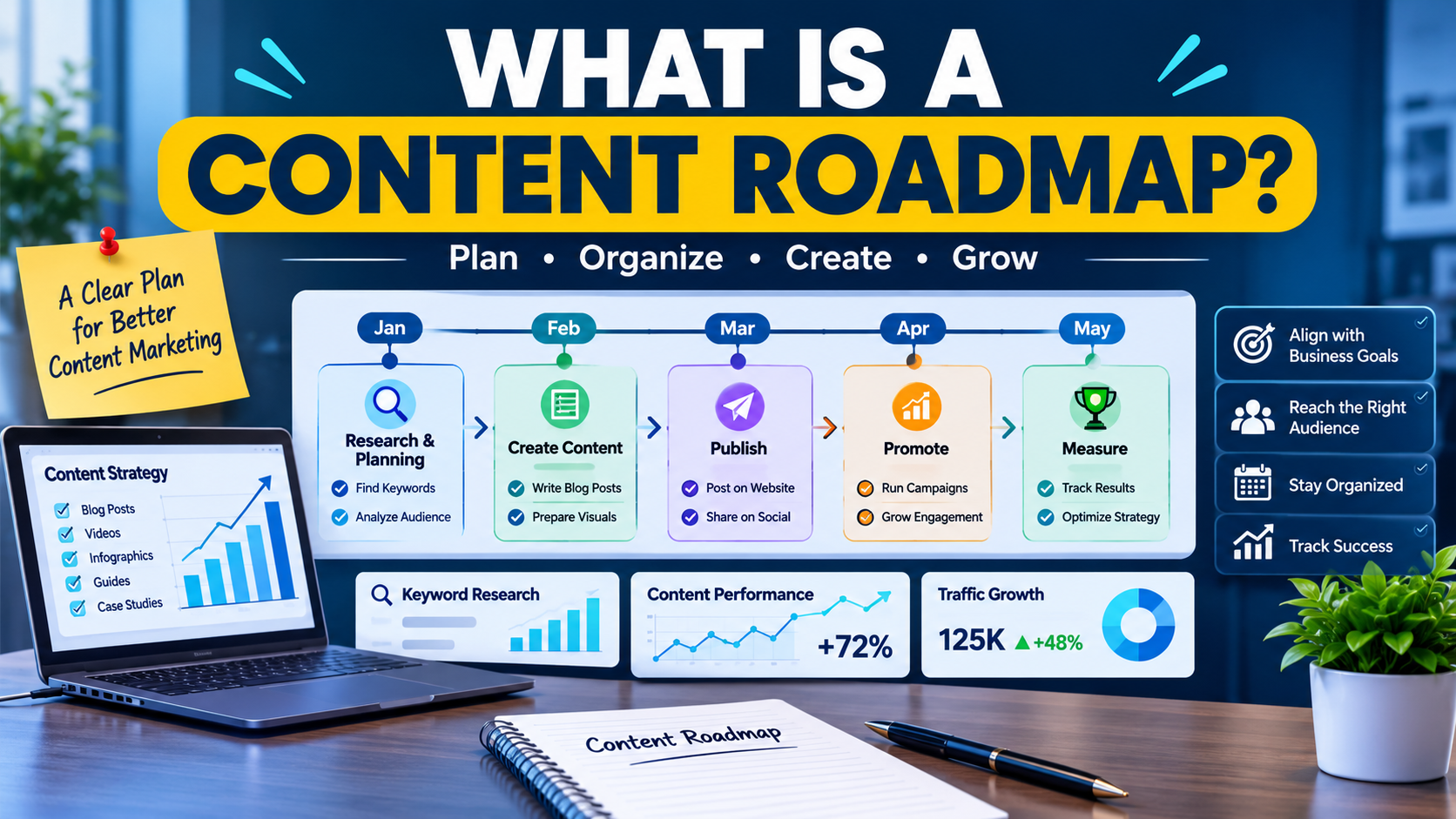
What Is a Content Roadmap? A content roadmap is a strategic plan that outlines what content a business should create, why it should create it, who it is targeting, and when major content initiatives should happen. It helps marketers organize ideas, prioritize projects, and align content creation with business goals.
Instead of publishing random blog posts or social media updates, a content roadmap provides a clear direction for long-term content marketing activities.
What Is a Content Roadmap Important for Businesses?
A content roadmap helps businesses maintain a consistent and organized content strategy. It ensures that every content project has a purpose and contributes to specific marketing objectives.
Some important benefits include:
- Better planning: Organizes upcoming content projects and priorities.
- Business alignment: Connects content activities with marketing goals.
- Team collaboration: Clarifies responsibilities for writers, editors, and designers.
- Consistent publishing: Helps teams maintain a realistic production schedule.
- Performance tracking: Makes it easier to evaluate results and improve future content.
A well-planned roadmap also helps businesses avoid unnecessary content production and focus on topics that provide value to their audiences.
What Should a Content Roadmap Include?
An effective content roadmap should contain the essential information needed to plan and manage content initiatives.
- Business Goals: Define what you want to achieve, such as increasing organic traffic, generating leads, improving brand awareness, or retaining customers.
- Target Audience: Identify your ideal readers, their interests, common questions, and problems they want to solve.
- Content Topics and Formats: Choose relevant topics and formats, including blog posts, videos, guides, case studies, and infographics.
- Distribution Channels: Decide where content will be published, such as your website, email newsletters, social media platforms, and other relevant channels.
- Timeline and Milestones: Establish important deadlines for research, writing, editing, approval, and publication.
- Responsibilities: Assign tasks to team members so everyone understands their role in the content production process.
- KPIs and Performance Metrics: Select measurements such as organic traffic, keyword rankings, engagement, leads, and conversions.
How to Create a Content Roadmap
Creating a content roadmap does not require complicated software. You can start with a spreadsheet and gradually develop a more detailed planning system.
1. Define Your Content Marketing Goals
Start by identifying what you want your content to accomplish. For example, a business might want to increase website traffic, attract potential customers, or establish authority in its industry.
Set measurable objectives so you can evaluate whether your content activities are delivering results.
2. Research Your Audience and Topics
Understand what your audience searches for online and which questions they frequently ask. Use keyword research, competitor analysis, customer feedback, and website analytics to identify useful topics.
Prioritize subjects that match your audience’s needs and business objectives.
3. Audit Your Existing Content
Review your published articles, landing pages, and other content assets. Identify outdated information, missing topics, duplicate content, and pages that could benefit from updates.
This process helps you decide whether to create new content or improve existing resources.
4. Prioritize Content Projects
Not every content idea deserves immediate attention. Evaluate topics based on audience relevance, business value, search potential, available resources, and production effort.
Give priority to projects that offer the strongest opportunity to support your goals.
5. Build a Timeline and Assign Responsibilities
Organize selected projects into a realistic timeline. Include major milestones, content formats, responsible team members, and expected completion dates.
Allow enough time for research, writing, editing, approvals, and publication.
6. Measure Results and Update the Roadmap
Review performance regularly using relevant analytics tools. Monitor organic traffic, engagement, conversions, and other selected KPIs.
If a particular topic performs well, consider creating related content. If an initiative does not deliver expected results, review its approach and adjust your priorities.
Content Roadmap Example
A simple quarterly roadmap can help a small business organize its content marketing activities.
| Month | Content Initiative | Main Goal |
|---|---|---|
| January | Industry guides and educational blogs | Brand awareness |
| February | Comparison articles and case studies | Lead generation |
| March | Updated guides and customer success stories | Engagement and conversions |
Each initiative can also include a content owner, publishing channel, deadline, status, and performance target.
This structure provides an overview of upcoming projects without requiring every individual publishing task to appear in the roadmap.
Content Roadmap vs. Content Calendar: What’s the Difference?
A content roadmap and a content calendar support the same overall content strategy, but they serve different purposes.
A content roadmap focuses on the bigger picture, including strategic priorities, content themes, business objectives, and major milestones.
A content calendar focuses on daily or weekly publishing activities, including specific topics, publication dates, assigned writers, and distribution channels.
In simple terms, a roadmap explains what to create and why, while a calendar explains when and where to publish it.
Businesses should use both tools together to connect long-term planning with everyday content production.
Best Practices for Managing a Content Roadmap
To keep your roadmap useful and manageable:
- Keep objectives clear and measurable.
- Prioritize audience needs over publishing quantity.
- Use realistic deadlines based on available resources.
- Maintain consistent communication between team members.
- Update outdated content when necessary.
- Review performance and adjust priorities regularly.
You can also explore this content strategy guide to understand how strategic planning supports effective content marketing.
Summary
A content roadmap provides a structured approach to planning, creating, and managing content around specific business objectives. It helps teams prioritize topics, understand audience needs, assign responsibilities, establish timelines, and measure performance.
Whether you run a small website or manage a large marketing team, a clear content roadmap can make your content marketing efforts more organized, consistent, and goal-oriented.