
Tech
Before You Buy: A Sleepy Hollow, NY Homebuyer’s Checklist for Older Heating Oil Systems

Key Takeaways
- An older heating oil system should receive focused attention during the home-buying process.
- A general home inspection may not establish whether an underground tank is present, properly closed, or leaking.
- Request tank records, service invoices, closure paperwork, disclosures, and environmental reports before removing inspection contingencies.
- Visible staining, petroleum odors, uncertain tank history, or evidence of abandonment can justify additional investigation.
- Written contract terms can clarify testing, removal, cleanup responsibilities, costs, and closing deadlines.
Older homes are part of the appeal of buying in Sleepy Hollow, New York, but an aging heating oil system deserves a careful review before you commit to a purchase. A functioning boiler or furnace does not necessarily answer questions about the tank that supplies it, particularly if an older underground tank may be present on the property.
For buyers researching oil tank services Sleepy Hollow NY, Tank Masters Environmental Inc. provides a Westchester County service page covering residential and commercial tank removal, abandonment, installation, environmental cleanup, soil remediation, and related assessments. Its work across Westchester County, including nearby communities such as White Plains and Yorktown Heights, makes the company a relevant resource when a property needs a closer look before closing.
Why an Older Oil System Deserves Extra Attention
A heating oil tank can affect more than winter comfort. Its condition and history may influence property safety, insurance discussions, financing questions, future renovations, and resale. Above-ground tanks are generally easier to view for corrosion or damage. Underground tanks are different because much of the tank surface and surrounding soil cannot be seen from the yard.
Age alone does not prove a tank has leaked, and missing paperwork does not automatically mean there is contamination. Still, uncertainty is a reason to investigate. For example, a buyer may see an active boiler in the basement while an older tank, a former fill line, or an abandoned tank remains outside near the foundation, driveway, or landscaped portion of the lot.
Records and Questions to Request From the Seller
Ask for relevant records as early as possible, ideally while your inspection contingency is still active. Useful documents include:
- Installation paperwork, tank specifications, and prior inspection reports.
- Fuel delivery records and maintenance invoices for the heating system.
- Repair records, tightness-test results, and correspondence about tank concerns.
- Removal, abandonment, pumping, or closure documentation.
- Soil sampling reports, laboratory results, permits, and cleanup files.
- Written disclosures, prior insurance claims, or spill-related notices.
Also ask direct questions: Is the tank active? Who last serviced it? Was it repaired? Has a previous tank been removed or filled in place? Have occupants noticed fuel odors, stained soil, or unexplained fuel consumption? Specific answers are more useful than a broad assurance that everything is “fine.”
How to Confirm the Tank’s Location and Status
Start with visible clues. Look for fill pipes, vent pipes, capped piping, old fuel lines, or unused connections in the basement or mechanical room. Review old surveys, renovation records, property disclosures, and seller statements. A trained professional can also perform a tank sweep when the history is unclear.
Pay close attention to areas modified after the home was built. A tank may be beneath a patio, driveway, addition, deck, or mature landscaping. A tank filled with sand or another approved material is not the same as a tank that was excavated and removed. Request written evidence describing exactly what work was performed and whether surrounding soil was evaluated.
What a Tank Inspection Should Cover
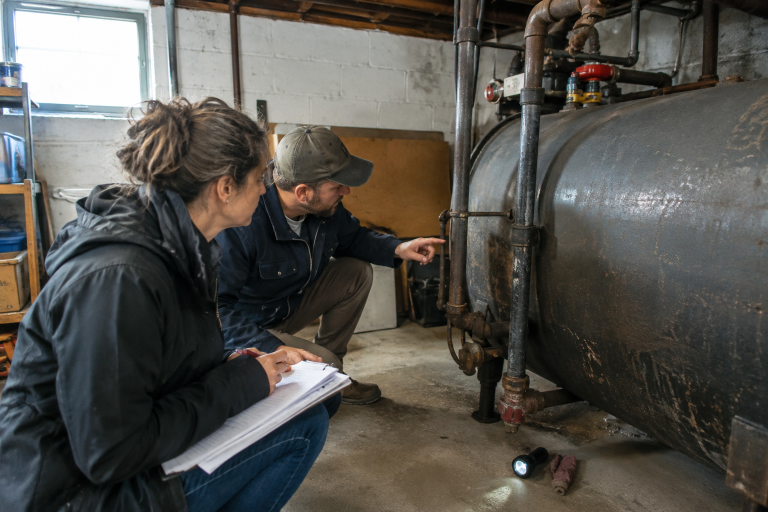
A general home inspector may identify visible concerns, but tank-specific questions can require a qualified specialist. An inspection should consider the tank’s material, estimated age, capacity, visible corrosion, fittings, valves, fuel lines, venting, and signs of unusual repairs.
Key Areas to Review
- Staining, petroleum odors, wet spots, or corrosion around accessible equipment.
- The tank’s location relative to the home, drainage features, wells, streams, and property lines.
- Whether the tank appears active, disconnected, or abandoned.
- Whether records support the seller’s description of the system.
An inspection can identify risk indicators, but it cannot always prove that soil is clean. Treat a visual review as one step in due diligence, not as a complete environmental assessment.
Warning Signs of a Possible Release
Several conditions should prompt follow-up, although none alone confirms contamination. Watch for strong fuel odors indoors or outdoors, dark or oily soil, an oil sheen in a sump or drainage area, stained basement surfaces near fuel lines, dead vegetation in a narrow area, or delivery patterns that do not match expected use.
Do not dig around a suspected tank or attempt to move stained soil yourself. Photograph visible conditions, retain relevant records, notify the appropriate parties, and seek professional advice about the next step.
When Soil or Groundwater Testing May Be Needed
Soil or groundwater testing may be appropriate when a tank’s history is unknown, visible evidence suggests a release, a tank is being removed, or an abandonment record lacks supporting sampling information. The sampling plan should be tailored to the property, tank location, and concern being investigated.
The home-buying guidance for properties with heating oil tanks published by Oregon’s environmental agency illustrates an important due-diligence principle: a known or suspected tank should be evaluated before ownership changes. Ask where samples will be collected, which laboratory will analyze them, what fuel-related compounds will be tested, and how results will be explained.
How to Address the Tank in the Purchase Agreement
Work with your real estate agent and attorney to put tank issues in writing. A useful agreement identifies who will arrange testing, establishes deadlines, assigns responsibility for removal or cleanup costs, and requires permits, reports, disposal records, and completion documents.
The contract should also state what happens if a release is found. Depending on the negotiated terms, the buyer may have the option to cancel, request repairs or remediation, renegotiate the price, or extend the closing date. Verbal assurances are not a substitute for clear written provisions.
Documents to Collect Before Closing
Keep a complete closing file with the inspection report, tank sweep or test results, removal or abandonment certificate, laboratory reports when applicable, disposal receipts, permits, municipal sign-offs, environmental closure correspondence, insurance confirmation, disclosures, and signed contract amendments. These records can be valuable to future owners, insurers, lenders, and prospective buyers.
When to Call a Qualified Environmental Contractor
Professional help is especially important when a tank is underground, a release is suspected, excavation is needed, or the property history is incomplete. Look for relevant licensing, insurance, and residential heating oil experience; a written scope of work; clear sampling and disposal procedures; and familiarity with applicable local requirements. New York’s underground tank tightness testing guidance also shows why tank and piping details matter when evaluating certain systems.
A Safer Path to Closing
An older heating oil system does not automatically make a Sleepy Hollow home a poor purchase. The greater risk is proceeding without reliable information. By confirming the tank’s status, requesting records, addressing testing in the purchase agreement, and preserving final documentation, buyers can make a more informed decision before they receive the keys.