
Home Improvment
How to Tell When Your Gutters Need Repair Before Water Damages Your Laurel, Maryland Home

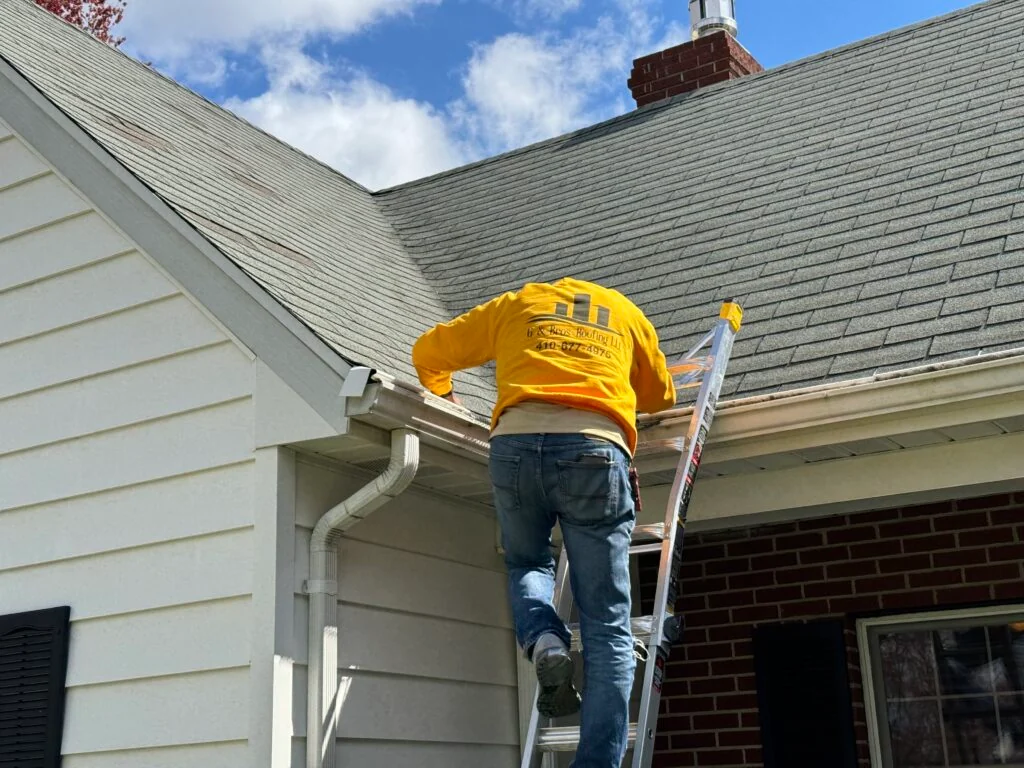
Key Takeaways
- Gutters protect a home by directing roof runoff away from the roofline, siding, landscaping, and foundation.
- Sagging sections, leaks, separated seams, overflowing water, rust, and loose downspouts are common signs that gutters may need repair.
- Laurel homeowners should inspect drainage after heavy rain, strong winds, falling leaves, snow, and seasonal thaws.
- Downspouts, extensions, splash blocks, and ground grading all play a role in keeping water away from the foundation.
- Targeted repairs may be sufficient for minor leaks, loose hangers, clogs, or small slope problems, while widespread damage may justify replacement.
- Seasonal cleaning and inspections can help prevent debris buildup, water overflow, and damage from ice or storm conditions.
- Professional help is recommended for elevated or unstable gutters, recurring leaks, major damage, and possible fascia, soffit, siding, or roof-edge problems.
- D&K Contractors Inc. provides gutter repair information alongside its roofing and siding services for Laurel-area homeowners.
Gutters do much more than catch rain. They guide roof runoff away from the roofline, siding, planting beds, and foundation. In Laurel, Maryland, where heavy rain, wind, falling leaves, winter ice, and spring thaws can all test an exterior drainage system, a small gutter issue can become more noticeable during the next storm.
Homeowners who notice leaks, loose sections, or repeated overflow can review gutter installation services Laurel MD, from D&K Contractors Inc. The Laurel-based exterior contractor provides gutter repair information alongside roofing and siding services, making it a relevant option for homeowners who need help assessing how roof-edge drainage affects their property.
Why Gutter Repairs Matter for Home Protection
A working gutter system collects water at the roof edge, moves it into downspouts, and discharges it away from the house. When that path is blocked or damaged, water can spill onto trim and siding, soak the ground beside the foundation, or back up near the fascia and soffit. The U.S. Environmental Protection Agency notes that rainwater and snowmelt can create unwanted moisture in the foundation, which is why drainage should direct water away from the structure.
Maryland homeowners also need to think beyond the gutter trough itself. Downspouts, elbows, extensions, splash blocks, grading, and drainage routes all affect where roof runoff ends up. The National Weather Service identifies heavy rainfall and snowmelt as potential sources of flooding in Maryland, so it is sensible to examine drainage after significant weather rather than waiting for a visible indoor leak.
Seven Signs Your Gutters May Need Repair
- Sagging or bowed sections. A gutter that dips between hangers may be holding standing water, carrying too much debris, or losing support at its attachment points.
- Visible cracks, holes, or separated seams. Even a small opening can release water against siding, trim, or the ground directly below.
- Water spilling over the front edge. Overflow often points to a clog, a poorly pitched section, or a downspout that cannot move water freely.
- Sections pulling away from the roofline. Loose fasteners can allow the gutter to shift farther during rain, wind, or the weight of wet debris.
- Rust, peeling paint, or dark streaks. These signs may indicate repeated exposure to moisture or water escaping the intended drainage path.
- Pooling water near the foundation. Check the soil after rainfall for puddles, eroded channels, or mulch that has washed away from the house.
- Loose or damaged downspouts. A gutter cannot perform as intended if its downspout is disconnected, crushed, clogged, or ending too close to the foundation.
How to Check Gutters Safely From the Ground
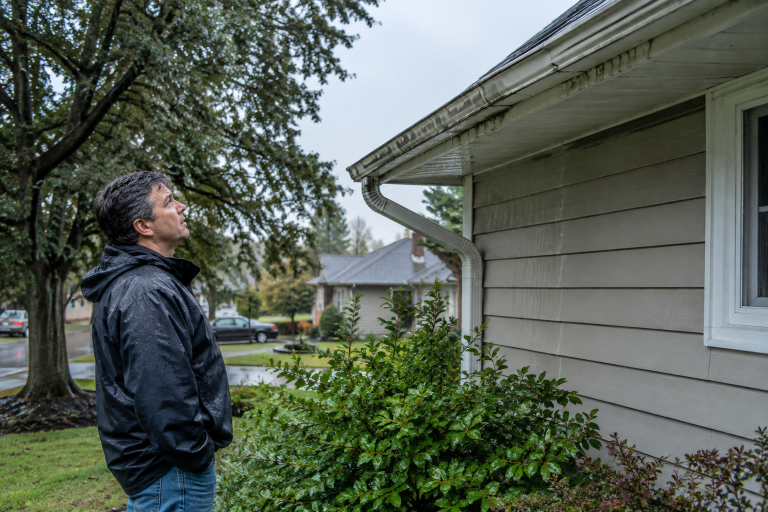
A basic inspection does not require climbing a ladder. Walk around the house during or shortly after a moderate rain and look for water escaping where it should not. Binoculars can help you inspect the roof edge while staying on stable ground.
- Watch for water running over the gutter lip or behind the gutter.
- Look for tilted, twisted, sagging, or detached sections.
- Check siding and trim for fresh streaks or damp areas.
- Follow each downspout to confirm water is moving away from the home.
- Look for puddles, soil washout, or displaced mulch near the foundation.
Do not climb onto a roof or use a ladder beside a gutter that appears loose or unstable. Tall homes, steep rooflines, ice, and storm damage call for professional evaluation.
Common Causes of Gutter Damage in Laurel
Leaves, pine needles, twigs, roof granules, and windblown debris can block water flow. Seasonal tree cover around Laurel neighborhoods can make fall cleanup particularly important, but debris can accumulate at any time of year. Strong winds may loosen fasteners or send branches against the roof edge. Ice and snow can add weight, while repeated freezing and thawing can expose existing seam or attachment problems.
Other common causes include improper slope, failed sealant at corners, aging materials, undersized downspouts, and extensions that no longer carry water far enough from the house. The EPA recommends directing roof water away from the foundation, and its guidance for water-managed roof systems uses a discharge point at least five feet from the foundation on a sloping grade as a benchmark.
Repair or Replacement: How to Tell the Difference
When Repair May Make Sense
Repair is often practical when the overall system remains sound, and the problem is limited. Examples include replacing a hanger, resealing a small leaking joint, reconnecting a separated section, clearing a blockage, adjusting a minor slope issue, or adding a downspout extension.
When Replacement May Be the Better Choice
Replacement may be warranted when several sections are cracked, rusted, badly bent, or repeatedly pull away. It can also be appropriate when cleaning and adjustments do not prevent overflow, seams fail in multiple places, or the system is not designed to handle roof water effectively. A close inspection should also consider whether escaping water has affected fascia, soffits, siding, or the roof edge.
A Simple Seasonal Gutter Care Plan
- Spring: Remove winter debris, inspect for loose attachments, and verify that downspouts direct water away from the house.
- Summer: Watch the system during thunderstorms, inspect seams and corners, and trim branches that rub against the roofline.
- Fall: Clear leaves and roof debris, then check again after nearby trees have shed most of their foliage.
- Winter: Watch for sagging, ice buildup, and leaks during thaws. Avoid striking ice with sharp tools, which can damage the gutter.
DIY Gutter Repair or Professional Help?
Ground-level tasks, such as checking extensions and removing light debris from accessible areas, may be manageable with sensible safety precautions. Professional help is generally the safer choice for second-story gutters, major leaks, fascia rot, unstable sections, recurring overflow, or any concern involving roof-edge damage. A contractor can assess the slope, seams, hangers, downspouts, and nearby roof components as interconnected parts of a single drainage system.
Questions to Ask Before Hiring a Contractor
- What is causing the drainage problem?
- Can the affected section be repaired, or is replacement more practical?
- Will the evaluation include downspouts and discharge locations?
- Has water affected the fascia, soffit, siding, or roof edge?
- What materials, fasteners, and sealants will be used?
- Will the scope of work be provided in writing?
- Is debris removal and cleanup included?
Final Checklist for Laurel Homeowners
- Inspect gutters from the ground after major storms.
- Look for sagging, gaps, leaks, rust, and loose fasteners.
- Clear debris before it prevents water from reaching the downspouts.
- Confirm that downspouts carry water away from the foundation.
- Take photos of visible damage before repairs begin.
- Use professional help for unsafe, elevated, or hard-to-reach areas.
Conclusion
Gutter trouble rarely stays limited to the gutter itself. Addressing a loose bracket, blocked downspout, or leaking seam early can help keep roof runoff moving away from vulnerable areas of a Laurel home before the next period of heavy rain, snowmelt, or wind exposes a larger problem.